Communities along Rivers:
Importance of Community Networking to Preserve Local Rivers
 |
Hari Srinivas |
|
Case Study Series E-012. April 2016
|

Abstract
Rivers play a critical role in supporting human settlements, ecosystems, and economic activities. This document explores the multifaceted importance of rivers, ranging from providing freshwater for drinking, agriculture, and industry to offering spaces for recreation and biodiversity. While rivers contribute significantly to community livability and environmental health, they also face severe threats from pollution, habitat destruction, and unsustainable human activities.
Drawing upon case studies from Asia, Europe, and South America, the text emphasizes the need for integrated, community-based river conservation strategies. It highlights the value of multi-stakeholder partnerships involving governments, NGOs, private sector actors, and educational institutions. The paper calls for collective, locally grounded action informed by environmental education and participatory governance to ensure the health and sustainability of river ecosystems.
Keywords
River ecosystems, Water pollution, Community-based conservation, Sustainable river management, Stakeholder partnerships, Environmental education, Livability and recreation, Watershed management
|
Why are Rivers Important?
Rivers in general embody many different values to different people.
For example, rivers symbolize connections, since they touch everyone, and everybody in principle lives downstream. Rivers also symbolize human health, since fresh water from rivers is essential to our communities and ourselves. Another value embodied in a river is that of habitat, highlighting the importance of protecting freshwater ecosystems for fish and wildlife both in the river itself, and along its banks.
The multi-dimensions and roles that rivers play in increasing the liveability of communities along rivers is illustrated in Figure 1. They range from water use for agriculture and industry and household purposes, to transportation, Food, recreation, mineral extraction, as well as being a habitat for animals and plants.
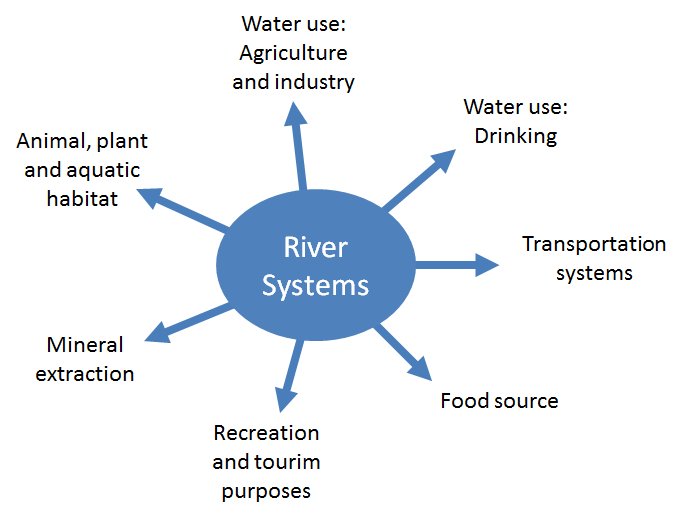 Figure 1: Various dimensions of river ecosystems
River banks are also used for leisure activities such as walking, jogging and bicycling. Sports events and festivals are frequently organized along river banks. River cruises for tourism purposes are also common. Rivers are major destinations for recreation by communities. Hobbyists fish in rivers, and other recreation activities such as boating, wildlife-watchers, sports and other leisure activities also take place along rivers.
While the advantages and benefits of rivers to communities is clear, what we fail to see sometimes is that throughout a river's course, human activities may have negative impacts on rivers. Of particular significance is water pollution that is caused by household, trade and industrial activities - solid wastes, chemicals, graywater and sewage, etc. - affect the quality of water and impacting its use for drinking and as a habitat for animals and plants.
This document looks at communities living along rivers, and explores the importance of community and local stakeholders in conserving and preserving local rivers. In researching to develop this paper, programmes and projects implemented in a number of river basins and systems were studied. These included Thames River, U.K., Mekong River, South-east Asia, Yodogawa River, Japan and Ganges River, India.
Environmental Problems of Rivers
A river ecosystem typically consists of three parts - the river watershed that essentially feeds the river, the river itself, and the estuaries that for at the point where rivers drain into the oceans. Understanding this ecosystem is crucial in identifying what is happening, where, and who is responsible - for both problems and solutions.
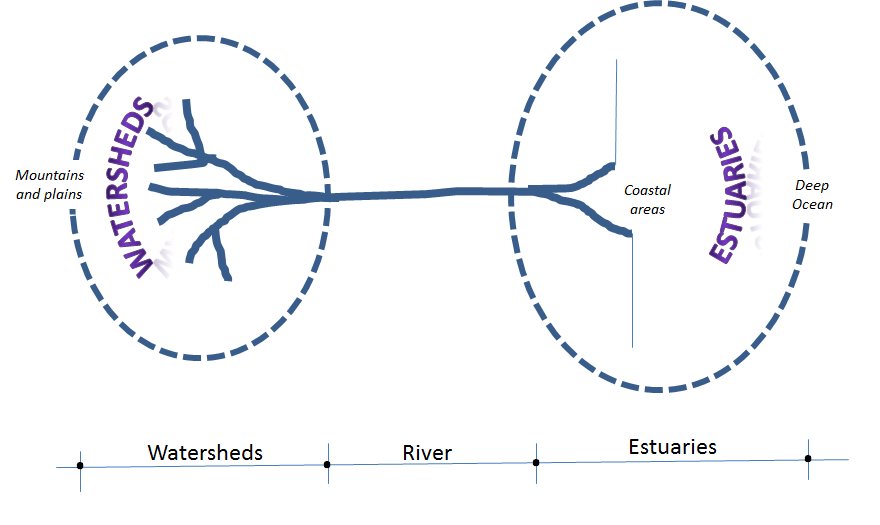 Figure 2: A river Continuum
Deforestation in watershed ares can lead to soil erosion, which increases the risk of flooding and landslides, as well as making it unusable for agriculture or household purposes
Along a river's course, communities living along it banks are responsible for a different set of problems that further affect water quality and quantity - over use, dumping of solid waste, draining of sewage and gray water, and urban debris that pollutes rainwater run-off that flows into rivers. Industries add to these problems by discharging waste water, chemicals etc. directly into rivers, without being safely treated beforehand.
When polluted rivers drain into oceans, the problems are compounded: pollution affects fish-stocks, destroys coral-reef habitats that further depletes fish stocks, and increases marine wastes, particularly plastics, entering the food chain and eventually affecting human when they consume it.
Rivers are indeed facing a number of environmental problems. This is despite the fact that more than half of potable water for human consumption comes from rivers. In some extreme cases, rivers, lakes and estuaries are unsuitable for such basic uses as fishing and swimming.
 Figure 3: Impacts and causes
There are a cascading set of stakeholders that have both positive and negative impacts on rivers, as illustrated in Figure 3. These include:
- Immediate and proximate communities living near rivers,
- Non-governmental organizations and community groups
- Factories and other business establishments
- Local provincial and national government agencies
Such stakeholders cause and are affected by a number of activities and their outputs (drawing water, health impacts, livability, transport, recreation, food, disaster risk etc.)
Communities living along rivers are most affected by these negative trends. Pollution of drinking water, and biodiversity loss are the top two environmental concerns. Communities realize that protecting and conserving rivers - the major source of drinking water - is critical for their future survival. There is a serious lack of awareness and even apathy in ordinary citizens and communities of the impacts of their everyday lives on rivers (waste dumping, pollution, etc.) or that of businesses (industrial affluent, chemicals, waste water etc.).
Table 1: Pollution along Major Rivers
- River Ganges, India
- Yellow River, P.R. China
- Mekong, Southeast Asia
- Amazon, South America
|
Many of the major rivers along which a number of ancient civilizations lived, now face serious environmental pollution due to our varied urbanized human lifestyles:
- Contaminated Rain-water run-off
- Soil erosion
- Agricultural pesticides and chemicals
- Hazardous and toxic industrial wastes
- Household wastes
- Sewage and graywater
Besides the above, overuse of water for consumption, and habitat loss due to dams and reservoirs, also add to the problems faced by rivers and the communities living along the banks. |
Many river-side communities, for example, still believe industrial output is the main source of pollution in our rivers. But the experts know the story is more complex. One of the most overlooked causes is "non-point sources" of pollution. This is the leading cause of water pollution in rivers today, and is expected to increase. The Table below highlights some of the point-source and non-point source of pollution that rivers are facing today.
Table 2: Point-source and Non-Point sources of River Pollution
| Point-source pollution |
Non-point source pollution |
Water pollution that occurs as a result of a single, identifiable source, such as:
- Waste water from a drain
- Sewage from toilets directly drained into rivers
- Industrial affluents and waste water
|
Pollution from multiple sources of waste (non-specific), such as:
- Pollution from agricultural fertilizers and chemicals
- Stormwater and rainwater run-off that also picks up dust, oil etc. from roads
- Dumping of solid wastes and debris
- Erosion due to deforestation and other causes.
|
Way Forward
As illustrated above, the problems that rivers face are complex, and therefore the solutions also need to be multi-faceted, implemented by different stakeholders at different levels. Communities living along rivers need to be the key agents for action to mitigate problems related to river pollution.
Programmes need to be developed that help the communities take action to improve the condition of rivers along which they live. This can be done using an aggressive public awareness and education campaign to show how everything we do on a daily continual basis, negatively impacts our rivers if it is not managed properly.
Partnerships are the key in order to bring together a range of stakeholders who bring different resources and skills to the partnership in order to solve multi-faceted problems. Community-based action therefore needs active partnerships with local stakeholders such as local governments, universities and research institutions, private sector companies, NGOs/NPOs et al.
These partners can be laid out along two axes, as shown in Figure 4, covering a mix of policies along the y-axis (local maintenance, waste/pollution prevention, conservation infrastructure, and integrated planning); and river ecosystems along the x-axis, (local level, river basin/watershed, and river estuaries). Such a layout helps us understand what needs to be done by whom and where.
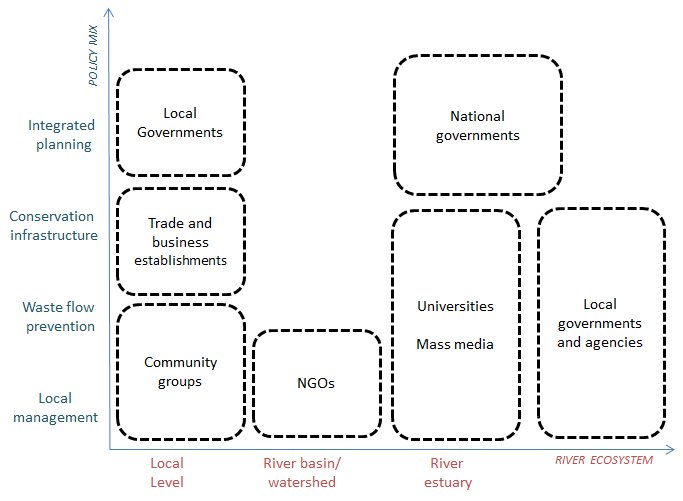 Figure 4: Stakeholder Analysis
Each stakeholder will bring an important resource to promote the activities that will lead to a healthy river. For example, local governments help in creating a healthy river policy and governance system; universities and research institutions help in monitoring to keep the river healthy; private sector companies help by checking and managing their production processes, and by sponsoring activities that focus on a healthy river. NGOs/NPOs essentially initiate activities and create groups within and among communities to campaign and work for a healthy river
It is critical to remember that everyone has a role to play. For example, communities need to be innovative to be able to create, develop and manage a river campaign. Local governments need a clear governance structure to link the different issues and problems together. Universities and research institutions need to have the capacity to assist and train communities to monitor and evaluate the river campaigns.
All these activities need to take place within a larger framework, as illustrated in Figure 4. It is critical that each of the local stakeholders not only help in the river campaign, but also help other stakeholders to perform their tasks. The river campaign needs to have a broad vision and implementation framework within which activities have to be planed. Such a campaign needs an environmental management system that brings together actors, resources and actions.
Some Strategies for Action
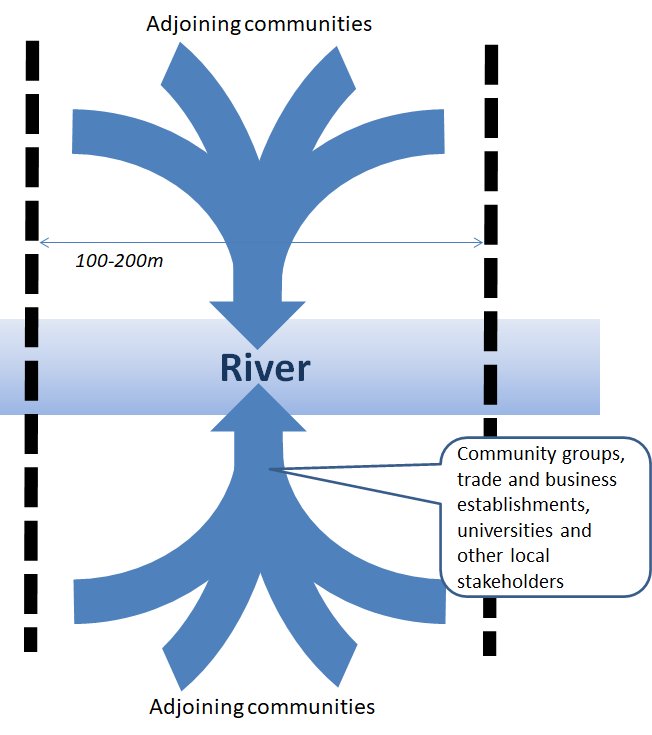 Policy frameworks and campaigns for river conservation can be implemented in a number of ways. Along many rivers in Asia, North America and Europe, rivers have been divided into segments of varying lengths (100-200 metres) and communities living along a river segment are made responsible to monitor and manage the segment.
Schools, NGOs, Universities, businesses located near a segment help the communities in their tasks, and overall coordination is one by local governments. The community are provided training and equipment to monitor water quality, along with awareness raising and capacity building.
Table 3 lists some of the good practices in river conservation worldwide.
Table 3: Good Practices in River Conservation
1 | Clean up of rivers and canals in Philippines
A strong public-private partnership with communities, businesses and local government units was used to clean up the canals under the "Adopt an Estero" Programme
|  |
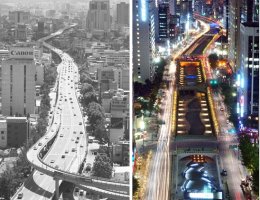
2 | A community friendly river returns in Seoul, South Korea
A small stream that used to run in central Seoul was covered up with infrastructure project over the years. This massive urban renewal project brought the river back, and "returned" it to the community.
|  |
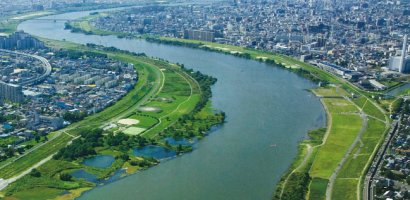
3 | Yodogawa river in Osaka is more than a river
Walkways, sports areas (tennis, basket ball, baseball, soccer etc.), jogging and bicycle tracks, gardens and other facilities are located for many kilometers along the Yodogawa river in Osaka, Japan. Much of these facilities are located in areas that are part of a larger plan to absorb and prevent flooding.
|  |
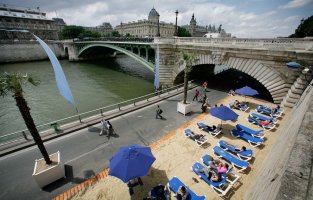
4 | Artificial beaches along the Seien in Paris
Paris-Plages is a plan run by the office of the mayor of Paris that creates temporary artificial beaches each summer along the river Seine in the centre of Paris, and, since 2007, along the Bassin de la Villette in the northeast of Paris.
|  |
5 | Recreational boating
Many communities all over the world provide recreational and competitive boating facilities for its communities to use.
|  |
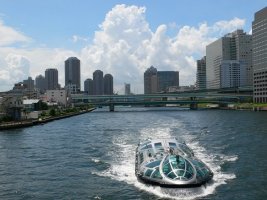
6 | Sightseeing tours along rivers in Tokyo
Tokyo has a number of rivers following through it, including Sumida, Arakawa, and Tamagawa rivers. Most of these rivers provide sightseeing tours on a "water bus" that gives a unique view of the city from the rivers.
|  |
8 | Energy generation through hydrodams
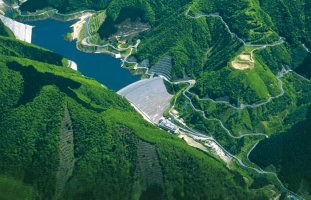
Upstream and watershed areas are frequently the location for energy generation through hydrodams. Many upstream and downstream areas of hydrodams are, in many cases, given over to recreational areas such as camping, boaating, fishing, water sports, and other activities. However, the advantages that hydrodams provide - water storage, flood prevention and electricity generation, has to be balanced with the destruction of forests and relocation of local communities.
|  |
9 | Watershed management for flood prevention in Toyooka
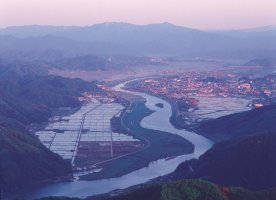
The mountains surrounding the city of Toyooka in Hyogo prefecture, Japan are unfortunately a source of forest debris that washes down to river flowing through the city, frequently resulting in flooding. Watershed management practices, including pruning of the surrounding forests and proper forest waste management has led to a significant reduction of flood risk, and to open up the river to aquatic bird habitats (particularly Cranes) for which the city is famous.
|  |
Simultaneously, the local government's planning and development departments - where much of the planning and design decisions at the city level are taken - were involved in a comprehensive manner to create citizens-friendly river-fronts.
Involving local school children is also important - they are the ones, after all, who will inherit the river. Private sector companies can help in monitoring their production process and provide sponsorship for river-cleanup activities.
Ultimately, it will be collective action, with different stakeholders bringing in different resources and working towards commonly agreed goals, which can and will bring about sustainable and lasting positive results.
|