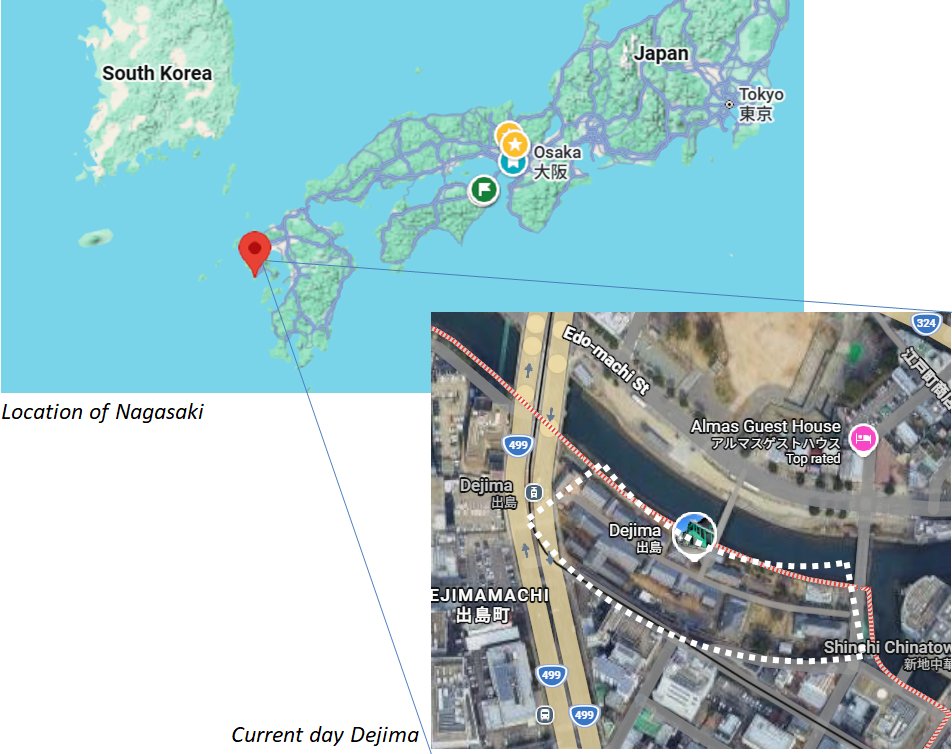
1. Introduction: Why Dejima Matters for Urban PolicyIn the global consciousness, Nagasaki is frequently reduced to a single date: August 9, 1945 when an atomic bomb was dropped on the city by US forces during World War II (Hiroshima had been bombed a few days earlier, on August 6th). While the preservation of the Atomic Bomb Museum and Peace Park is essential for global memory, it created what urban theorists call a "monoculture of identity" that threatened to flatten Nagasaki's 450-year history as an international port and gateway.
The Dejima reconstruction project represents a radical departure from standard urban development. Typically, heritage is seen as a "bottleneck" to progress, a set of restrictions that prevent "modernization". In Nagasaki, however, the void of Dejima was treated as a strategic asset. This paper frames the reconstruction as a "spatial fix," a deliberate intervention in the urban fabric to create a new center of gravity for culture and commerce. By analyzing the political economy of this project, we see how the city utilized the 1949 Nagasaki International Culture City Construction Law to engage in Narrative Diversification. The 1949 Nagasaki International Cultural City Construction Law, passed alongside a similar act for Hiroshima, provided a special legal framework and financial support to rebuild the city as a center for peace and culture rather than just reconstructing it as an industrial city. It was essential for rebuilding the city, which had struggled with recovery. This special legal framework was unique because it allowed the city to bypass certain national zoning laws, prioritizing cultural recovery as a form of urban "rehabilitation." Ultimately, the policy logic of Dejima demonstrates that transnational governance, the collaboration between Japanese archaeology and Dutch archival intelligence, can reconstruct a city's soul even after physical erasure. Methodologically, this study adopts a qualitative case study approach combining field visits, archival research, policy documents, and historical institutional analysis. It draws on municipal planning records, national cultural property legislation, and Dutch East India Company archival materials online to trace the evolution of the Dejima reconstruction agenda. 2. Historical Timeline: From Strategic Enclave to Urban Erasure2.1 Edo Period Function (1636 to 1859)During the Edo period, Dejima was a masterpiece of institutionalized globalization. The Tokugawa Shogunate faced a paradox: they required foreign trade and technology but feared foreign ideology (for example, Christianity). The solution was a 1.5-hectare artificial island that functioned as an intellectual filter. Within this confined space, the Dutch brought Rangaku (Dutch Learning), introducing Japan to Western medicine, astronomy, and military science.
The policy of "Dejima isolation" was, in fact, an early form of information management. The island was an institutionalized laboratory where the Shogunate could harvest global knowledge while maintaining domestic stability. This historical period effectively positioned Nagasaki as what we would today call a "Special Economic Zone".
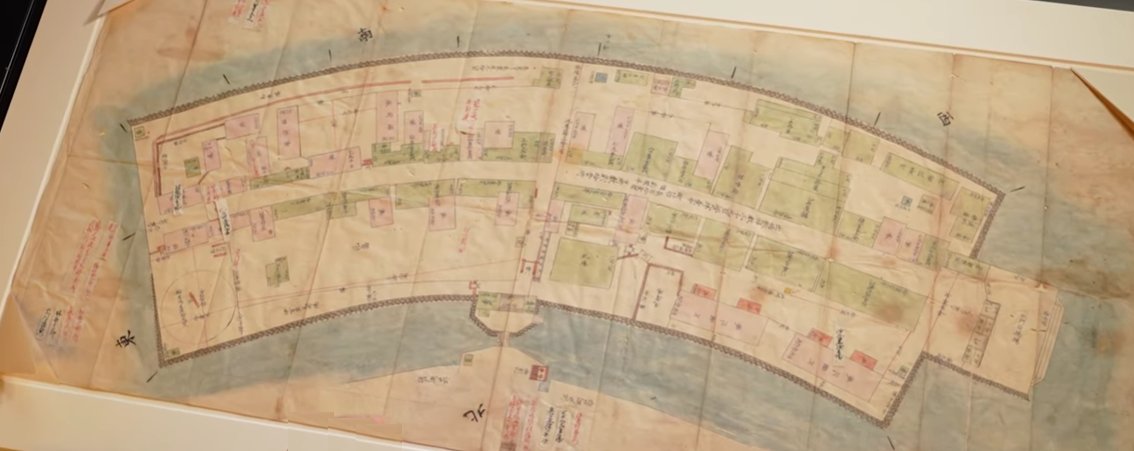 Figure 2: An Ancient Map of Dejima (U. Leiden archives) The Dutch residents were not merely traders; they were diplomatic conduits. The annual Opuu-fumi (reports on world affairs) provided by the Dutch kept the Shogunate informed of global shifts (See Deep Dive Box #1), proving that Dejima was also a site of high-stakes political intelligence. 2.2 Obsolescence and the Logic of ErasureThe 1858 Treaty of Amity and Commerce The Ansei Treaties (of which The Treaty of Amity and Commerce was a part) were a series of agreements between Japan and United States, Netherlands, Russia, Britain and France, signed in the mid-1800s to allow international trade in the ports of Edo (current-day Tokyo), Kobe, Nagasaki, and Yokohama rendered Dejima's function obsolete. With the opening of treaty ports in Yokohama and Hakodate, the "needle's eye" of Dejima was no longer necessary.During the Meiji period, the priority shifted to industrial capacity. The "Nagasaki Harbor Improvement Project" (1880s - 1900s) saw the surrounding sea filled in to create space for warehouses, tram lines, and expanded docks. This "erasure" was not an accident; it was a policy-driven decision to prioritize the infrastructure of a modernizing nation-state over the "relics" of a feudal past. By 1920, Dejima was no longer an island; it was a landlocked district. The original stone walls were buried under meters of industrial fill, and the fan-shaped silhouette was lost to the harbor's expansion. This period illustrates how rapid modernization often requires the "creative destruction" of heritage to facilitate the movement of goods and capital. 2.3 Timeline of Dejima's Restoration PolicyThe restoration of Dejima is notable for its incredible duration. Unlike many Western projects that seek "immediate" results, Nagasaki's policy was one of incrementalism, allowing for long-term budgeting and meticulous archaeological verification. Table 1 illustrates the key milestones of Dejima's history
Table 1: Key Milestones of Dejima's History
3. The Policy Turn: Why Reconstruction Began in the 1950s3.1 Archaeology as Policy CatalystThe shift from erasure back to preservation began in earnest in 1951 with the formation of the Dejima Restoration Association. This was a pivotal moment where the local government transitioned from passive recognition to active intervention. Archaeology served as the primary policy catalyst by moving the project away from "theme park" speculation toward scientific restoration.
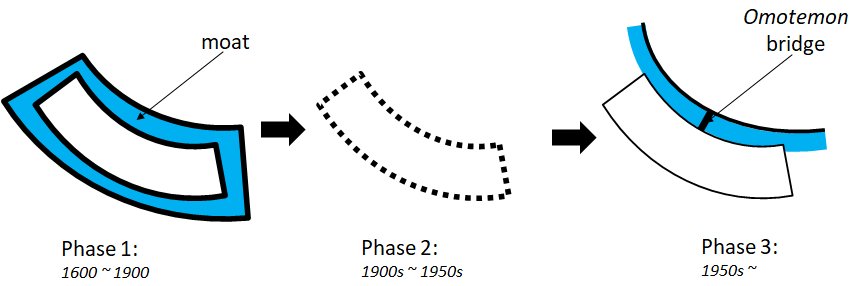 Figure 3: Schematic transformation of Dejima's "re-islanding"
As illustrated in Figure 3, the "Re-islanding" of Dejima was carried out in different phases explained in Table 2 below.
Table 2: The Phases of "Re-islanding" Dejima
By uncovering the original stone walls (ishigaki), the city could claim that the reconstruction was not a fantasy, but a "recovery of the real." This scientific grounding was essential for securing funding from the national Agency for Cultural Affairs. In 1953, the site was designated a National Historic Site, a move that legally protected the "void" of Dejima from further commercial development. This illustrates a key policy lesson: for a lost site to be rebuilt, it must first be "validated" through the empirical lens of archaeology to overcome the stigma of being a "fake." 3.2 Political Timing and Identity ReframingThe 1950s and 60s were a period of economic stabilization in Japan. Once basic survival was addressed, Nagasaki's leaders began to look at the city's brand. There was a desire to soften the singular atomic narrative as one only two cities in the world that was impacted by an atomic bomb. By elevating Dejima, policymakers introduced a Cosmopolitan City pillar to its recovery plans.This reframing allowed Nagasaki to engage with Europe (specifically the Netherlands) as a diplomatic peer. It provided a narrative of "long-term friendship" that predated the traumas of World War II. In this sense, Dejima was a tool of "soft power," helping the city re-emerge on the international stage as a center of culture and peace. The policy was to use the "Dutch Connection" to attract international attention, culminating in visits from the Dutch Royal Family in 2017, which further cemented Dejima's status as a site of national importance.
4. Preservation Philosophy: Reconstruction Versus Conservation4.1 Form and Spatial AuthenticityThe Dejima project highlights a fundamental divide in global preservation philosophy. Western conservation, rooted in the Venice Charter (1964), prioritizes the "original material fabric"-the actual stones and wood of the era. However, Japan has a long tradition of shinzō (new construction), most famously seen in the ritual rebuilding of the Ise Grand Shrine The Ise Grand Shrine (Ise Jingu) in Japan undergoes a complete ritual rebuilding, known as Shikinen Sengu, every 20 years, a tradition spanning over 1,300 years since 690 CE. Over 60 structures, including main sanctuaries (Naikū and Gekū) and Uji Bridge, are rebuilt on adjacent sites to ensure spiritual purity, symbolize renewal (tokowaka), and pass down ancient architectural skills. The 62nd, and most recent, was completed in 2013, with the 63rd underway for 2033. every 20 years.In Dejima's case, the policy prioritized spatial and formal authenticity. Since the original wood had long since rotted, the city focused on using traditional 17th-century carpentry techniques and materials (Japanese cedar and pine) to recreate the experience of the space. This approach argues that the "spirit" of the heritage resides in the craftsmanship and the architectural layout rather than the physical age of the molecules.
4.2 The Nara Document: A Paradigm Shift for DejimaThe 1994 Nara Document on Authenticity was a watershed moment for Dejima's policy team. It acknowledged that in many Asian cultures, rebuilding with traditional materials is a valid form of preservation. For Nagasaki's planners, this provided international cover. They could argue that a reconstructed Dutch Trading Post was a "legitimate heritage asset" because it was based on rigorous research of original blueprints and the Dutch East India Company (VOC) records kept in The Hague.
Table 3: The Dimensions of Dejima's Reconstruction
Before 1994, international conservation was governed largely by the Venice Charter (1964), which emphasized the "originality" of the physical fabric. Under Venice Charter logic, Dejima, having been physically demolished and paved over, could never be "authentic" again. However, the Nara Document, drafted in Japan in 1994, fundamentally redefined authenticity to include cultural diversity and intangible heritage. 4.2.1 From Material Fabric to Intellectual IntegrityThe Nara Document (see Appendix 1 for a discussion of the Document) argues that authenticity does not reside solely in the age of the timber or the original stones, but in the credibility of the information sources."Authenticity... appears as the essential qualifying factor concerning values. The understanding of authenticity plays a fundamental role in all scientific studies of the cultural heritage." (Nara Document, Art. 10) For Dejima's policy-makers, this meant that if the reconstruction was based on rigorous primary sources (such as the Dutch East India Company's Dagregisters and detailed 19th-century maps), the resulting structure is "authentic" because it represents an honest and researched truth. The authenticity moved from the matter (the wood) to the mind (the research). 4.2.2 Authenticity of Technique (Shinzō)A critical component of the Dejima policy is the use of Miya-daiku (shrine carpentry) techniques. The Nara Document allows for "authenticity of spirit and feeling" and "authenticity of tradition."In the Japanese context, the knowledge of how to build is more sacred than the building itself. By employing master carpenters to use hand-tools, traditional joinery (kigumi), and period-accurate materials (such as specific Japanese cedars), Nagasaki argued that the process of reconstruction was an act of preservation. They weren't just building a house; they were preserving the 17th-century Japanese skill-set required to create that house. 4.2.3 The "Disneyland" DefenseThe Nara Document provided Nagasaki with "diplomatic immunity" against criticisms that Dejima was becoming a "historical theme park." By aligning with ICOMOS (International Council on Monuments and Sites) standards, the city could prove that:
4.3 Comparison of Authenticity FrameworksThe debate surrounding Dejima's reconstruction ultimately reflects a broader transformation in international heritage policy. Prior to the 1990s, conservation frameworks tended to emphasize+ surviving material remains, treating reconstruction with suspicion because it risked blurring the boundary between preservation and replication. The adoption of the Nara Document on Authenticity, however, expanded the definition of heritage value to include cultural traditions, craftsmanship, documented knowledge, and spatial continuity.In this context, Dejima became an important case study in how authenticity could be understood not only through original materials, but also through the accuracy of reconstruction methods and the preservation of historical meaning and skills. Table 3 summarizes the shift in policy logic from the Venice Charter framework to the post-Nara approach that informed Dejima's restoration.
Table 4: Logic of the Nara Document
4.4 Impact on Policy LogicBy adopting the Nara Document's logic, Nagasaki City successfully lobbied for National Government funding. The Agency for Cultural Affairs (Bunkacho) accepted that the "authenticity" of Dejima was found in its form and function as a gateway for Rangaku. This allowed the city to justify the multi-billion yen price tag as an investment in "cultural continuity" rather than just a construction project.This theoretical grounding turned Dejima from a local construction site into a globally recognized "best practice" for the reconstruction of lost urban heritage. It essentially "legalized" the city's desire to rebuild its pre-war identity.
5. Tourism as Policy Instrument5.1 The Transition to an Experience EconomyIn the 1980s and 90s, Japan's "bubble economy" and subsequent stagnation forced cities to find new revenue streams. Heritage was reimagined as an investment. Dejima was no longer just a museum; it was an "anchor tenant" for the city's tourism strategy. The policy logic here was the Experience Economy. The Experience Economy reframes heritage from passive preservation to active consumption, where urban history is staged as an immersive product that generates repeat visitation, media attention, and spillover benefits to surrounding businesses. By creating an immersive, walkable district, the city could:
5.2 The Risk of SanitizationA significant policy challenge was the "sanitization" of history for tourism. To make Dejima an attractive destination, some of the harsher realities, such as the strict confinement of the Dutch, the presence of enslaved people from Southeast Asia, and the rigid social hierarchies, can be downplayed.Policymakers had to balance the need for a "harmonious exchange" narrative that sells tickets with a "critical history" that maintains academic integrity. Recent policy shifts have attempted to address this by including exhibits on the darker sides of VOC trade, ensuring the site doesn't become a "theme park." 6. Governance and Institutional Architecture6.1 Municipal Leadership and Long-term VisionThe success of Dejima is a testament to the continuity of municipal governance. Most urban projects fail because of shifting political winds, but Nagasaki has maintained a consistent "Dejima Plan" since 1951. This required:
The reconstruction of Nagasaki city relied on a combination of both governmental authority (land readjustment) and negotiated purchases, rather than solely voluntary buyouts. Because the city was devastated, authorities implemented a "war disaster reconstruction plan" following the November 1945 cabinet approval, which necessitated remapping land ownership in the ruined districts. The reconstruction was a hybrid process: the government used, in effect, a form of eminent domain to restructure the city plan, but this was managed within the context of a heavily ruined city where, ultimately, many survivors had little choice but to work with the city's land readjustment plans. 6.2 Stakeholder EngagementThe governance of Dejima involved a complex "Triple Helix" of stakeholders:
7. Comparative Perspective: Selective Memory and Material Truth7.1 Dejima vs. Hiroshima's A-Bomb DomeThe comparison with Hiroshima is illuminating. Hiroshima chose to preserve the ruin, the Genbaku Dome, as a "negative heritage" site. Its power came from its skeletal, damaged state. Nagasaki's Dejima policy was the inverse: it sought to heal the urban scar by physically rebuilding the void.So while Hiroshima preserved the moment of destruction, Dejima sought to restore the centuries of construction that preceded it. This revealed a policy choice: is the city's identity based on its trauma or its historical longevity - Dejima, and Nagasaki in a broader sense, chose the latter to create a more complete picture. 7.2 Global Comparisons: Warsaw and DresdenLike the postwar reconstruction of Warsaw Old Town in Warsaw, which was meticulously rebuilt using eighteenth century paintings by Canaletto and prewar urban plans to restore national continuity after near total destruction, Dejima represents a deliberate assertion that narrative authenticity can outweigh material rupture. In Warsaw's case, reconstruction functioned as an act of political and cultural sovereignty under conditions of imposed regime change.Similarly, the Frauenkirche in Dresden was reconstructed between 1994 and 2005 using original stones catalogued from the rubble and integrated with new materials, symbolizing reconciliation and civic healing rather than simple architectural replication. Its logic emphasized moral restoration through architectural completion. By contrast, Hiroshima adopted a different strategy: the preservation of the A Bomb Dome as a stabilized ruin within a broader Peace Memorial framework. Here, authenticity resided in material survival and visible destruction, reinforcing a global anti-nuclear narrative rather than restoring a prewar urban form.
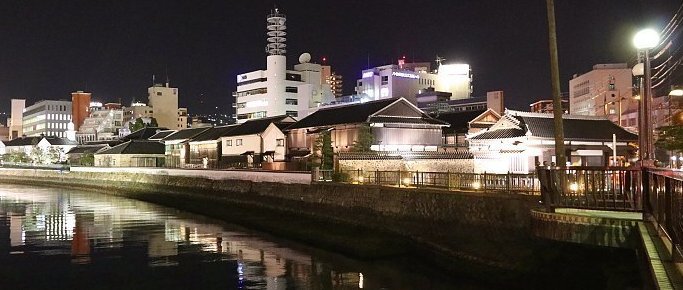
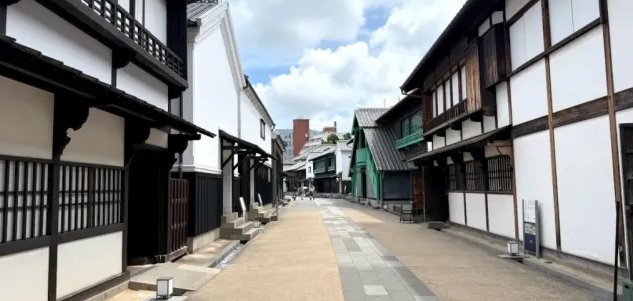 Figure 4: Current day restoration of Dejima
8. Conclusion: From Recovered Island to Policy AgendaThe reconstruction of Dejima was not simply an architectural exercise. It was a strategic recalibration of urban identity. By choosing to rebuild what had been erased, Nagasaki converted absence into leverage: cultural, diplomatic, and economic. The project reframed heritage from a constraint on development into an instrument of development.Yet the deeper significance of Dejima lies beyond Nagasaki itself. It raises urgent questions for cities confronting rupture, rapid growth, or the loss of historical layers. 8.1 What Does Dejima Mean for Post-Conflict Cities?For post-conflict cities, Dejima offers a third pathway between preserving ruins and pursuing total redevelopment. Sites of trauma are essential, but when a city is defined only by destruction, its narrative horizon narrows. Dejima demonstrates that reconstructing pre-conflict layers can rebalance identity without erasing memory.The lesson is institutional rather than aesthetic. Recovery requires legal frameworks, long-term budgeting, archaeological validation, and political continuity across decades. It also requires reframing reconstruction as research driven renewal rather than nostalgia. In this sense, Dejima belongs in the same comparative conversation as the rebuilding of Warsaw Old Town in Warsaw or the Frauenkirche in Dresden, though its incremental timeline makes it a uniquely deliberate case of active memory. 8.2 Implications for Rapidly Urbanizing Asian Port CitiesAcross Asia, historic waterfronts are being erased under the pressure of logistics hubs, container terminals, and real estate speculation. In cities from Jakarta to Manila, port histories risk being buried beneath infrastructure that privileges throughput over narrative continuity. Dejima suggests that former trade enclaves can be repositioned as cultural capital rather than sacrificed as obsolete land. Even when original structures are gone, archival recovery, spatial reconstruction, and digital modeling can re-anchor urban identity. The key insight is that authenticity can rest in documented form, technique, and research integrity, not solely in surviving material fabric.For rapidly modernizing cities, this implies that heritage policy must be integrated into master planning early, before reclamation and road grids render recovery prohibitively expensive. Dejima shows that late recovery is possible, but only at significant infrastructural cost. 8.3 Can the Model Scale, or Is It Uniquely Japanese?Certain elements of the Dejima model are culturally specific. Japan's long tradition of cyclical rebuilding, and the intellectual shift enabled by the Nara Document on Authenticity, provided normative space for reconstruction. Municipal continuity since 1951 also reflects governance stability that cannot be assumed elsewhere. However, the transferable components are clear:
8.4 A Forward Looking PropositionDejima ultimately reframes urban memory as infrastructure. Just as ports once moved copper and silk, reconstructed heritage now moves meaning, visitors, and diplomatic relationships.For cities emerging from conflict, confronting monocultural branding, or racing toward hyper modernization, the policy question is not whether the past can be perfectly preserved. It is whether fragments of erased geographies can be strategically reassembled to diversify identity and build resilience. Dejima suggests that when memory is treated as a long-term civic investment rather than a sentimental afterthought, reconstruction can become a tool of urban foresight. The recovered island is therefore less about the seventeenth century than about the twenty first: about how cities choose to curate their complexity in an era of rapid change. ReferencesI. Historical Context
|