Towards a Sane Approach to
the Informal Sector: Eight Policy Clusters for Developing Countries
Hari Srinivas
Policy Analysis Series E-251
Abstract:
The informal sector forms a vital yet undervalued component of the economies of developing countries, providing employment, services, and resilience for millions of low-income households. Despite its ubiquity and deep interlinkages with formal economic systems and global supply chains, it remains marginalized in mainstream policy discourse.
This paper outlines a more sane and inclusive approach to informal sector policymaking by presenting eight coherent policy clusters: recognition and legitimization, inclusive social protection, support without formalization pressure, data and participation, pro-poor urban planning, fair linkages to the formal economy, strengthening collective voice, and graduated pathways to formalization.
These eight clusters respond to the lived realities of informal workers and enterprises, emphasizing flexibility, dignity, and integration rather than coercion or neglect. Drawing on global examples and national policies, the paper offers actionable insights for reimagining policy frameworks that truly work for the poor.
The informal sector remains a defining feature of most developing economies, employing a majority of the labor force and providing essential goods and services in both urban and rural areas. Yet, despite its ubiquity and vital contributions, it continues to be overlooked or mishandled by policymakers.
Dominant policy paradigms often emphasize formalization, taxation, and regulation without fully understanding why people work informally in the first place, or how deeply these livelihoods are woven into local and global economies. For low-income households especially, the informal economy is not an anomaly but the primary arena of economic participation.
This neglect is not just economically shortsighted - it is ethically and socially irresponsible. Informal workers are not waiting to be absorbed into formal structures; they are actively sustaining households, communities, and entire supply chains in creative and resilient ways.
A truly sane policy approach begins with recognition: that the informal sector is rational, responsive, and deeply embedded in the realities of poverty and exclusion. It requires designing policies that meet people where they are, and work with, not against, the economic systems they have built for themselves.
1. The "Invisibility" of the Informal Sector
The informal economic sector often lacks the attention it deserves for several interrelated reasons, despite its widespread presence and critical contribution. This policy analysis is based on a review of official policies listed in Annex 1 at the bottom.
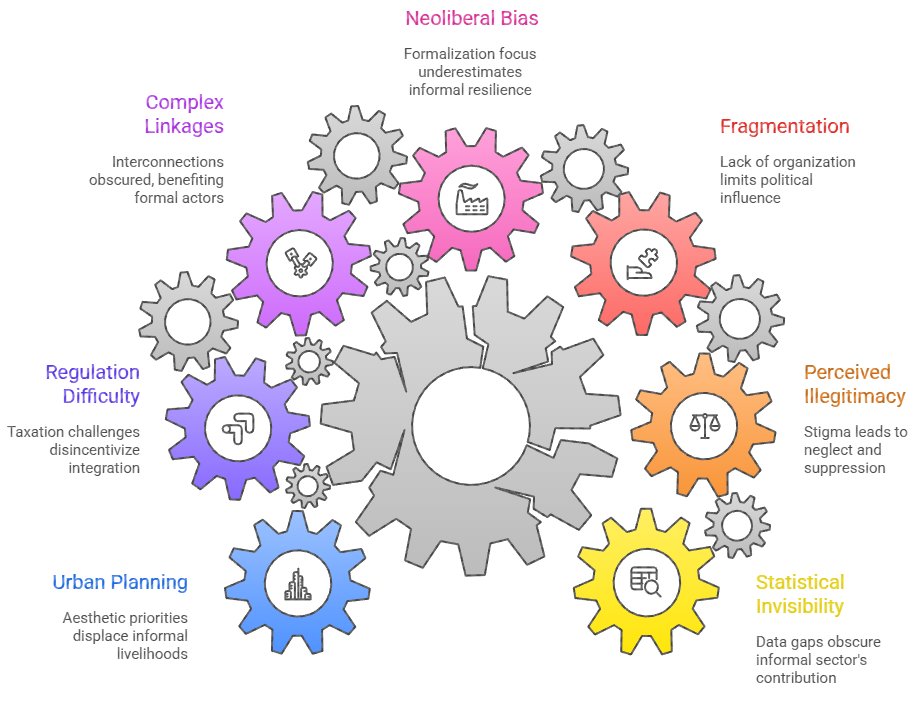
Figure 1: The Invisibility of the Informal Sector
Statistical and Policy Invisibility
Governments and international agencies typically prioritize data from formal economies. Since informal sector activities are rarely registered, taxed, or regulated, they often go undocumented and unrecognized in official statistics. This leads to underrepresentation in policy discourse and economic planning.
Perceived Illegitimacy
There is a perception that informal sector work is illegitimate, illegal, or substandard. This attitude, often rooted in colonial or industrial-era economic thinking, leads to neglect or suppression rather than support. Activities like street vending, waste picking, or home-based manufacturing are seen as "marginal" rather than integral to the economy.
Fragmentation and Lack of Voice
Informal workers are usually not unionized or organized, which limits their ability to advocate for recognition, rights, or resources. Without political leverage or formal representation, their interests are often sidelined in national policy agendas.
Formal-sector-centric development models
Many development strategies, particularly those influenced by neoliberal economics, emphasize privatization, deregulation, and formal employment growth. This creates a bias toward formal sector solutions and underestimates the resilience and adaptability of informal sector models.
Complex Linkages with the Formal Economy
The informal and formal sectors are deeply interconnected - informal workers supply cheap labor, raw materials, or intermediary goods to formal enterprises. However, these linkages are often invisible or intentionally obscured, allowing formal actors to benefit from informal labor without accountability or support.
Difficulty in Regulation and Taxation
Policymakers often find it challenging to regulate or tax informal activities, which disincentivizes their integration into official economic frameworks. This administrative difficulty contributes to ongoing neglect.
Urban Planning and Aesthetic Priorities
In cities, informal activities are frequently targeted for removal or relocation in the name of beautification, modernization, or tourism. Urban plans rarely incorporate informal livelihoods as legitimate components of the economy or urban fabric.
The informal sector remains overlooked not because it is unimportant, but because it sits uncomfortably with prevailing models of governance, data systems, and economic theory. Recognizing its role (especially in global supply chains and urban economies) requires a paradigm shift that values livelihoods over legality, inclusion over control, and resilience over regulation.
2. The Informal Sector and low-income households
When viewed through the lens of low-income households, the neglect of the informal sector becomes not only shortsighted but also ethically and developmentally flawed. Some of the reasons for this situation include:
The Informal Sector Is the Economy for the Poor
For many low-income households, the informal sector is not a "fallback." It is the mainstay of survival. It provides employment, income, goods, and services that are affordable, accessible, and culturally embedded. Ignoring or marginalizing this sector effectively disregards the economic life of the majority in many developing countries.
Social Safety Net by Default
In the absence of robust public welfare systems, the informal sector often functions as a de facto safety net. It absorbs labor during economic shocks, enables flexible work arrangements, and facilitates mutual aid and community-based support systems. Deprioritizing it weakens the resilience of the poor.
Asset-Building and Entrepreneurial Potential
Many poor households use informal work to build assets over time, for example from a vegetable cart to a home-based tailoring unit. These are not just survival tactics but are stepping stones for upward mobility and enterprise expansion. Formalization efforts that fail to recognize this may instead disrupt livelihoods.
Services that Bridge Formal Gaps
Informal actors often fill the void left by underperforming formal institutions, for example, informal transport where public buses fail, informal housing where urban planning lags, informal finance where banks exclude. To overlook these is to misunderstand the adaptive systems the poor rely on.
Policy Blindness Reinforces Inequality
Policies that only support formal jobs, registered businesses, or taxed income often bypass the poor entirely. This institutional bias perpetuates inequality by excluding the informal sector from access to credit, training, infrastructure, or social protection.
Moral Responsibility
From a human development standpoint, it is ethically problematic to ignore the informal economy when it directly affects the dignity, security, and rights of the poor. Policies that dismiss the informal sector risk entrenching poverty and uncertainty, rather than alleviating them.
Overlooking the informal sector is not just an oversight in economic planning - it is a failure to engage with the lived realities of the poor. A pro-poor development agenda must recognize the informal economy not as a problem to be solved but as a system to be understood, supported, and gradually strengthened on its own terms.
3. The Sane Policy Approach
Despite its size and critical role in the livelihoods of millions, the informal sector has long been treated as a residual or problematic part of the economy rather than as a core component of sustainable development. Traditional policy approaches often emphasize formalization, taxation, and regulatory compliance without fully appreciating the lived realities, adaptive strategies, and economic contributions of informal workers and enterprises. Such approaches risk marginalizing the very people they aim to support, reinforcing exclusion rather than fostering inclusion.
The Sane Policy Approach reframes how policymakers and practitioners understand and engage with informality. At its heart is a recognition that informal work is not an aberration but a rational, responsive response to structural constraints, especially in contexts of poverty, limited public services, and uneven economic opportunities. Instead of viewing informality as a problem to be eradicated, this approach treats it as an integral part of the economic fabric that deserves legitimacy, support, and thoughtful integration into broader development strategies.
This approach is articulated through eight coherent policy clusters that together offer a more humane, inclusive, and practical framework for informal sector policy. These clusters span recognition and legitimization, inclusive social protection, support without formalization pressure, participatory data systems, pro-poor urban planning, fair linkages to the formal economy, collective voice strengthening, and graduated pathways to formalization. Collectively, they emphasize dignity, flexibility, and partnership with informal actors rather than coercion or exclusion. The aim is not to eliminate informality but to create conditions in which informal workers and enterprises can thrive, contribute, and transition at their own pace when and where it makes sense.
1
Policy Cluster 1
Recognition and Legitimization
At the heart of any sane approach to informality is the need to see it as legitimate. Informal workers are not invisible, illegal, or temporary; they are economic actors providing goods, services, and employment under real constraints. According to the ILO (2023), more than 60 percent of the world's employed population - about 2 billion people - work informally, with this figure rising to over 85 percent in sub-Saharan Africa. Acknowledging their existence and role is the first step toward fair and effective engagement.
What: Acknowledge the informal sector as a valid and necessary component of the economy.
Why: Without recognition, policies will continue to exclude or harm informal workers. Legal identity and recognition (e.g. street vendor licenses, home-based worker registration) give legitimacy and protection.
Example:
The city of Durban, South Africa, has implemented inclusive licensing systems for street vendors, offering official IDs and regulated vending zones to legitimize and protect informal traders.
2
Policy Cluster 2
Inclusive Social Protection
A sane policy recognizes that poverty is not just about low income, but also about vulnerability to shocks. Informal workers typically lack access to social security, leaving them exposed to illness, injury, or economic crises. The World Bank estimates that only 20 percent of informal workers worldwide have access to any form of social protection, leading to high vulnerability during crises such as COVID-19. Tailored, accessible social protection schemes can reduce long-term poverty and improve resilience.
What: Extend social security (health care, pensions, maternity, child benefits) to informal workers in flexible and affordable ways.
Why: The poor should not have to choose between food today and health care tomorrow. Social protection systems must include and adapt to informal realities.
Example:
India's Unorganised Workers' Social Security Act enabled informal workers to access subsidized health insurance and pensions through self-registration and biometric ID cards (Aadhaar).
3
Policy Cluster 3
Support-without-Formalization Pressure
Informal actors often avoid formalization not by choice but by necessity. Requiring registration, permits, or taxation as a condition for accessing basic support only reinforces exclusion. A survey by the OECD (2021) found that 72 percent of micro-entrepreneurs in West Africa cited high costs and complex procedures as key deterrents to formal registration. A smarter approach is to offer support first, allowing stability and growth before expecting compliance.
What: Offer public services (infrastructure, credit, training) without requiring immediate formalization (i.e. business registration, taxation).
Why: Formalization is a process, not a precondition. Immediate formalization requirements often drive people deeper into informality. Support should meet informal actors where they are.
Example:
In Kenya, community-based microfinance groups known as chamas offer savings, loans, and training without needing members to be formally registered, enabling low-income entrepreneurs to grow at their own pace.
4
Policy Cluster 4
Data and Participation
Policies that do not measure the informal sector accurately (or listen to its workers) are bound to fail. A UN-Habitat report (2022) found that over 50 percent of cities in low-income countries have no reliable data on the number or location of street vendors or informal settlements. Creating spaces for participation and systems for better data collection ensures that informal realities inform decision-making and resource allocation.
What: Invest in participatory data systems that include informal sector realities and involve informal worker groups in policy-making.
Why: If the data doesn't count the poor, the policy won't either. Community-based enumeration, informal sector surveys, and participatory planning can fill this gap.
Example:
In India, the Self-Employed Women's Association (SEWA) conducts its own data collection and uses it to negotiate with government agencies for targeted services and legal reforms.
5
Policy Cluster 5
Pro-Poor Urban Planning
Urban policy often treats informal activity as a nuisance to be removed, not a livelihood to be supported. In Lagos, Nigeria, over 20,000 street vendors were forcibly evicted from key urban areas between 2017 and 2019, according to Human Rights Watch. A more constructive approach is to plan cities in ways that include informal traders, workers, and residents, integrating them into transport, zoning, and service delivery.
What: Integrate informal livelihoods into urban development and infrastructure plans (e.g. space for markets, access to sanitation, housing security).
Why: Informal workers are part of the urban economy. Displacement or criminalization undermines both their rights and the city's economy.
Example:
Bangkok's municipal government works with local vendors to designate sidewalk vending zones with sanitation access and waste collection, rather than criminalizing them.
6
Policy Cluster 6
Fair Linkages to the Formal Economy
The informal sector does not operate in isolation - it is closely tied to formal businesses through subcontracting, supply chains, and service provision. In Bangladesh's garment sector, an estimated 30 percent of workers are informally subcontracted, working in unregistered units with no contracts or protections. These links must be made more transparent, regulated, and fair, so that informal actors receive appropriate value and protection.
What: Regulate and support the linkages between formal firms and informal suppliers/workers (e.g. in textiles, construction, waste).
Why: Informal labor often subsidizes formal sector profits. Policies should ensure decent work conditions and fair contracts for informal contributors.
Example:
In Latin America, waste picker cooperatives such as Colombia's ARB have been formally contracted by municipalities to handle waste collection and recycling, with guaranteed pay and equipment.
7
Policy Cluster 7
Strengthening Collective Voice
UNDP
Informal workers lack power not because they are few, but because they are fragmented. The WIEGO network reports that in 15 countries, informal worker organizations have won legal status and participate in social dialogue platforms with governments and employers. Enabling informal workers to organize into, for example, cooperatives, unions, or associations, is essential for improving their negotiating position and protecting their rights.
What: Encourage and protect unions, cooperatives, and networks of informal workers.
Why: Power asymmetries make informal workers vulnerable. Collective action can level the playing field and improve bargaining power.
Example:
In Ghana, the Informal Hawkers and Vendors Association (IHAVA) successfully negotiated with city officials to stop forced evictions and create vendor representation on local planning boards.
8
Policy Cluster 8
Graduated Pathways to Formalization
Formalization is not a one-time action, but a gradual process, supported by incentives, information, and clear benefits. After Brazil launched Simples Nacional, over 11 million microenterprises formalized between 2006 and 2016, contributing significantly to tax revenues and service access. A tiered and flexible approach allows informal actors to formalize at their own pace, and makes formalization meaningful, not just bureaucratic.
What: Offer gradual, voluntary, and incentive-based routes to formalization (e.g. tiered taxation, simplified registration, training programs).
Why: One-size-fits-all formalization is unrealistic. Stepwise support helps small-scale informal enterprises grow and transition when ready.
Example:
Brazil's Simples Nacional tax regime allows micro and small businesses to register through a simplified process, offering tax breaks and phased integration into the formal system.
Way Forward
Formality v/s Informality?
The future of the informal economy should not be framed as a choice between informality and formality. Rather, it should be understood as a question of how governments can build economies that are more inclusive, resilient, and equitable for all. Informality is not simply a regulatory failure to be corrected. It is a rational response to poverty, exclusion, limited opportunities, and institutional gaps. Policies that ignore these realities are unlikely to succeed.
More than Control and Compliance
The challenge before policymakers is therefore not to eliminate the informal sector, but to remove the conditions that make informality the only viable option for millions of people. This requires replacing policies based on control and compliance with policies based on recognition, partnership, opportunity, and trust. Formalization should be viewed as an outcome of successful development, not as its starting point.
Roadmap for Transition
The eight policy clusters presented in this paper offer a practical roadmap for that transition. Together they seek to create an enabling environment in which informal workers and enterprises can improve productivity, strengthen livelihoods, access social protection, and participate more fully in economic and civic life without sacrificing the flexibility that often underpins their resilience.
Expanding People's Choices
Ultimately, a society should not be judged by how effectively it regulates its informal economy, but by how effectively it expands people's choices. When governments invest in education, health, infrastructure, finance, legal protection, and fair markets, many informal enterprises will choose to formalize because it offers genuine advantages, not because they are compelled to do so.
Partnerships for Inclusive Cities
A sane approach to the informal sector therefore begins with a simple but powerful premise: people are not the problem. The barriers they face are. Development policy must move beyond seeing informal workers as objects of regulation and instead recognize them as partners in building inclusive cities, resilient communities, and sustainable economies. By placing dignity, opportunity, and participation at the center of policy, countries can transform the informal economy from a symbol of exclusion into a foundation for shared prosperity.
A Dignified Livelihood
The measure of successful development is not how many people are pushed into the formal economy, but how many people are able to pursue secure, productive, and dignified livelihoods, regardless of where they begin.


 The city of Durban, South Africa, has implemented inclusive licensing systems for street vendors, offering official IDs and regulated vending zones to legitimize and protect informal traders.
 India's Unorganised Workers' Social Security Act enabled informal workers to access subsidized health insurance and pensions through self-registration and biometric ID cards (Aadhaar).
 In Kenya, community-based microfinance groups known as chamas offer savings, loans, and training without needing members to be formally registered, enabling low-income entrepreneurs to grow at their own pace.
 Bangkok's municipal government works with local vendors to designate sidewalk vending zones with sanitation access and waste collection, rather than criminalizing them.
 In Latin America, waste picker cooperatives such as Colombia's ARB have been formally contracted by municipalities to handle waste collection and recycling, with guaranteed pay and equipment.
 In Ghana, the Informal Hawkers and Vendors Association (IHAVA) successfully negotiated with city officials to stop forced evictions and create vendor representation on local planning boards.
 Brazil's Simples Nacional tax regime allows micro and small businesses to register through a simplified process, offering tax breaks and phased integration into the formal system.