Greening from Within:
Corporate Environmental Strategies in Japan
Hari Srinivas Case Study Series E-075. October 2025.
Abstract:
Japan's businesses have advanced beyond compliance-based environmental action to embed sustainability into their core strategies and operations. This case study identifies ten domains of green practice - from eco-design and energy efficiency to philanthropy and resource conservation - illustrating how Japanese companies operationalize environmental goals through innovation, technology, and management reform.By profiling real-world initiatives across industries, the document highlights how Japan's private sector has aligned environmental responsibility with economic performance. These experiences underscore the importance of organizational culture, transparency, and continuous improvement in achieving lasting environmental impact and business competitiveness.
Keywords:
corporate sustainability, green innovation, environmental strategy, eco-efficiency, Japan, resource conservation, sustainable management, environmental leadership
“
Green business practices that maintain and sustain good environmental quality are increasingly becoming a vital component of economic competitiveness. Consumer awareness of detrimental effects of products on the environment, both direct and indirect, have promted many companies to incorporate environmental measures in the manufacturing, administration, purchase, sale and other stages. Measures have concentrated on an expanded and inspired version of the original 3Rs: reduce, reuse and recycle. ”
Introduction
Japan's approach to environmental management within the business sector has evolved from simple compliance with regulations to a deeply rooted philosophy of sustainability. Driven by consumer expectations, global market pressures, and national policy incentives, Japanese companies have redefined competitiveness through environmentally responsible innovation. Green business practices have therefore become an essential part of the country's industrial culture - integrating ecological considerations into design, production, operations, and corporate governance.This document outlines ten key categories of green practices that illustrate how Japanese firms embed environmental thinking across multiple levels of business activity. From eco-design and efficient energy use to corporate philanthropy and resource conservation, these practices reveal how sustainability is operationalized in everyday decision-making. The Japanese experience offers valuable insights into how environmental stewardship can be transformed into a strategic advantage that supports long-term growth and resilience.
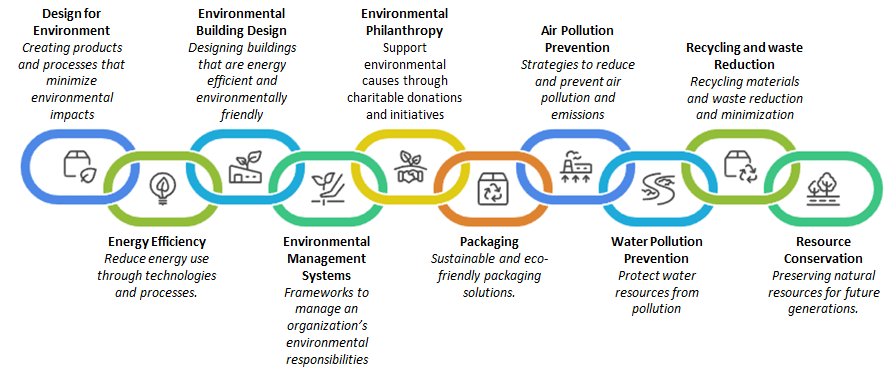
Figure 1: Categories of Corporate Environmental Strategies in JapanThe ten categories (illustrated in Figure 1 above) of green business practices outlined below with examples are:
- Design for Environment
- Energy Efficiency
- Environmental Building Design
- Environmental Management Systems
- Environmental Philanthropy
- Packaging
- Air Pollution Prevention
- Water Pollution Prevention
- Recycling and Waste Reduction
- Resource Conservation
1. Design for Environment
Design and development of environmental products essentially aim to reduce the use of restricted substances, minimize environmental impact, and increase the recyclability of the products. Companies have achieved these goals by working closely with their customers and suppliers to exchange information regarding the environmental performance characteristics of their products.Such programmes incorporate environmental considerations, including facility design materials selection, energy consumption, manufacturing, product use and operation, and final disposition, early in the product development process.
P anasonic's Eco-Design Approach: Panasonic designs its home appliances with life-cycle assessment tools to reduce CO? emissions at each stage?from raw materials to disposal. For example, its refrigerators use vacuum insulation panels to minimize energy loss while being easy to disassemble for recycling. T oyota's Eco-Vehicle Design: Toyota's hybrid and hydrogen-fuel-cell vehicles incorporate lighter materials, recyclable parts, and reduced use of lead and mercury, reflecting a holistic eco-design process. S ony's Green Product Standards: Sony applies strict �gGreen Management 2025�h standards to all new products, emphasizing energy efficiency, minimal resource use, and elimination of hazardous substances like PVC and brominated flame retardants. 2. Energy Efficiency
There are many issues that are generally covered under 'energy efficiency'. These include:
- Utility Cost Reduction
Companies aim to reduce energy usage and therefore utility costs to the greatest extent possible. Such aims cover, for example, heating, cooling and ventilation, lighting levels and water conservation.- Energy Conservation
Companies first perform an energy audit, covering loads, devices etc. Enabling future improvements, such audits focus on time-of-use, conservation measures possible etc. and propose measures that are both operational and technological in nature. Measures include cost, ease of implementation, energy saved, as well as cost reduction in general.- Water Conservation
Water conservation efforts included the conversion of water cooling systems to closed-loop systems, recirculating the water instead of piping in public-supply water, and the elimination of nonessential processes and modification of piping and timer systems.Employee awareness and participation are an important contribution to efforts in achieving energy efficiency.
H itachi's Smart Factory Initiatives: Hitachi factories employ IoT-based energy management systems to monitor and optimize energy use across operations, cutting electricity consumption by over 15%. L awson Convenience Stores: Lawson stores nationwide have adopted LED lighting, high-efficiency air conditioning, and in-store solar panels, reducing power use significantly without compromising comfort. D aikin's Energy Audits: Daikin regularly performs detailed energy audits in its facilities, identifying opportunities for process improvements and introducing inverter technologies to reduce energy demand. 3. Environmental Building Design
There are many ways in which efficient building design can lead to efficient energy use. Such measures are taken both in the architectural design of the building itself, as well as in the various infrastructure and services that are installed in it. These include: proper building to site orientation, high efficiency lighting, optimized daylighting, oversized low restriction ducts, variable speed drives in the HVAC units, increased building insulation, heat mirror glass, reflective roof coating, occupant sensors throughout the building, and efficient office equipment.
T okyo Midtown Complex: The mixed-use Tokyo Midtown development integrates passive solar design, rooftop gardens, and high-performance glazing to reduce heating and cooling loads. O bayashi Corporation's Green Offices: Obayashi's �gTechno Station�h headquarters in Tokyo uses natural ventilation, daylighting, and solar power, achieving a 50% energy reduction compared to conventional offices. S ekisui House's Smart Homes: Sekisui House incorporates heat-reflective roofing, high insulation, and rainwater reuse systems into its residential designs to enhance comfort and reduce environmental footprint. 4. Environmental Management Systems
Environmental Management Systems are tailored to each company's own needs. While the results can vary, self-audit programs focus on company-specific environmental issues, enabling among other things, a high awareness of environmental issues. Implementation of EMS covers areas such as policy, organizational restructuring, marketing identity and standards etc. Companies achieve this by developing checklists, marking realistic environmental compliance targets, encouraging transparency and accountability, and similar measures. Effective communication of such measures, internally and externally, remains critical to better understanding, acceptance and compliance. It also serves as a focus to challenge all involved to develop new approaches to environmental improvements
C anon's Global EMS: Canon's operations follow an ISO 14001-certified EMS that integrates environmental performance targets into every business unit and supplier relationship. N EC's Eco Symbol Program: NEC developed an internal environmental label for products and processes meeting strict EMS criteria, fostering employee awareness and external transparency. F uji Xerox's Self-Audit Framework: Fuji Xerox conducts annual EMS audits across all its offices, emphasizing waste reduction, responsible procurement, and continuous improvement cycles. 5. Environmental Philanthropy
A committed approach to environmental improvement goes beyond mere cost-benefit analyses and concerns broader, universal issues. Many companies do not rule out philanthropy as a means to achieve environmental consciousness. Companies favouring this typically take measure such as access to environmental technology, access to engineering support, free educational classes, staff volunteering in community programmes, information dissemination of activities and measures, and assistance in publishing research and promotional materials. Besides supporting existing environmental efforts and actions, companies are also directly involved in activities such as tree-planting.
T oyota's Forest of Tomorrow: Toyota funds and maintains reforestation projects in Aichi Prefecture, combining corporate volunteering with biodiversity conservation. A EON's Tree-Planting Campaign: AEON Group's �gOne Million Trees�h initiative has involved staff and customers in planting millions of trees worldwide, symbolizing community participation in sustainability. R icoh's Social Contribution Club: Ricoh employees volunteer in environmental education programs for schools and NGOs, sharing knowledge about recycling and sustainable living. 6. Packaging
Packaging issues have come to the fore due to increasing quantities of municipal waste, with a significant portion coming from consumer goods packaging. This has highlighted the need to both increase recycling and minimize the amount of material used in packaging. This would reduce waste and decrease the use of virgin/new materials.Most efforts to streamline packaging have focussed on three aspects: (a) using as little packaging material as needed; (b) using recycled material wherever it is environmentally and economically sound; and (c) making packaging as recyclable as possible.
S hiseido's Minimal Packaging Policy: Shiseido reduced packaging materials in its cosmetics line by redesigning bottle shapes and using recyclable plastics, lowering packaging waste by 20%. K irin Brewery's Eco-Label Bottles: Kirin developed returnable glass bottles and lightweight PET bottles, along with easily removable labels to simplify recycling. M uji's Simple Packaging Design: Muji eliminates unnecessary outer packaging and uses plain recycled paper or biodegradable plastics, aligning with its minimalist brand ethos. 7. Air Pollution Prevention
Air pollution prevention efforts of companies have generally focussed on both source and waste reduction, and on reuse and recycling. Preventing air pollution within a company's manufacturing processes remains the key approach. Cleaning and processing, switch to non-polluting technologies and materials, reduced generation of waste water, converting hazardous by-products to non-threatening forms, etc. have been attempted in this regard.Indirect air pollution prevention measures by companies also cover transportation. Examples of such measures include: providing company transportation to employees; offering commuting information and selling public transit passes; and encouraging employees to carpool and use public transportation. Companies have also initiated successful programmes such as the use of bicycles to commute to work, telecomuting, and work-at-home etc. to reduce pollution due to commuting.
N issan's Clean Production Lines: Nissan plants use low-VOC paints and solvent recovery systems, cutting airborne emissions and improving workplace air quality. T okyo Gas Fleet Electrification: Tokyo Gas replaced much of its vehicle fleet with electric and hybrid vehicles, reducing local air pollutants from transportation. K yocera's Bicycle Commuting Program: Kyocera promotes cycling and carpooling among employees, providing bicycle parking and incentives for low-carbon commuting. 8. Water Pollution Prevention
Measures to prevent water pollution essentially strive to conserve and protect water quality - in terms of its use reduction and disposal, waste water treatment, procedural changes and recycling. Water conservation programmes have also included the substitution/reduction of hazardous materials and the generation of hazardous wastes. Employee awareness, education and training in pollution identification and reduction is critical in achieving successful results.
S umitomo Chemical's Closed-Loop Water Systems: The company recycles process water at its manufacturing plants, significantly reducing effluent discharge into local waterways. A sahi Breweries' Wastewater Treatment: Asahi's breweries use advanced bioreactors to purify wastewater before release, ensuring compliance with high water quality standards. M itsubishi Electric's Hazardous Material Substitution: The company replaced harmful cleaning agents with water-based alternatives, minimizing chemical contamination of wastewater. 9. Recycling and Waste Reduction
Recycling and waste reduction is a recurring theme that is an integral part of most of the above environmental measures taken by companies. Most popular and tangible among these measures have targeted paper. Efficient use of paper, streamlining processes and tasks that need excessive paper, paper source sorting and disposal systems (both in-house and external systems), are covered here. Other wastes such as glass, aluminum, cardboard, wooden pallets, polyurethane and polystyrene foam, furniture etc. have similarly been targeted for source sorting and disposal systems. Besides cost consideration, companies have included waste disposal methods and techniques, recycling efforts etc. as criteria to select trash contractors.Another measure incorporated by companies is the purchase of recycled materials for office supplies. Products with higher percentages of post-consumer content, reused copy/printer toners cartridges, recycled tissue and napkins etc. have been incorporated in purchasing decisions. Online internet and intranet networks have been used as an alternative to inter-office memos and conventional communication methods. Centralized information, leadership, and a corporate commitment have been found to be critical in developing a culture for the 'reduce, reuse, and recycle' corporate environment.
F uji Xerox's Resource Recycling Factory: The company reuses parts and materials from collected copiers and printers, achieving a 99.5% recycling rate. U niqlo's Clothing Collection Program: Uniqlo collects used garments from customers and sends wearable items for reuse or textile recycling worldwide. J R East's Station Waste Sorting: East Japan Railway Company introduced detailed waste segregation systems in its stations, promoting recycling of plastics, paper, and bottles among commuters. 10. Resource Conservation
Water, electricity, office supplies, manufacturing and production materials, building materials etc form resources that a company uses. Conservation of such resources is an important environmental measure taken by companies. These include restrictions and reductions in the use of resources, recovery of (re)usable resources from waste products, recycling of resources after adequate processing. Companies also resort to the use of certified products that have had minimum environmental impact, and have been included in a comprehensive resource recovery cycle, including post-production processing. Thus company purchasing decisions are increasingly including environmental concerns in their choice of supplies, materials and refills.Resource conservation measures have also covered maintaining regulatory compliance, chemical source reduction, emissions control, equipment review and construction support, and product stewardship. Increased 'returnable' content in a product or its packaging has also been used in conservation efforts.
I TOCHU Corporation's Green Procurement: ITOCHU prioritizes purchasing office and industrial supplies with certified eco-labels, reducing the overall environmental load of operations. M itsui Fudosan's Material Reuse: The real estate group reuses construction materials such as timber and concrete aggregates across redevelopment projects. S harp's Resource Efficiency in Manufacturing: Sharp reduced raw material use by optimizing component design and recycling rare metals from used electronic products. Conclusion
The Japanese corporate sector demonstrates that sustainability and profitability are not mutually exclusive but can reinforce one another through innovation and accountability. By systematically adopting green practices, companies have achieved measurable reductions in resource use and emissions while enhancing operational efficiency and brand reputation. These initiatives also contribute to Japan's broader environmental goals, aligning business performance with national and global sustainability targets.The examples highlighted here confirm that genuine progress occurs when environmental values are internalized within corporate structures and decision-making processes. As environmental challenges intensify globally, Japan's experience underscores the importance of proactive, integrated approaches that combine technology, management systems, and stakeholder engagement. The pathway Japan has forged serves as both a model and a motivation for other nations seeking to green their business sectors from within.
This work by GDRC is licensed under a Creative Commons Attribution-ShareAlike 4.0 International License. You are free to share and adapt this piece of work for your own purposes, as long as it is appropriately cited. More info: http://creativecommons.org/licenses/by-sa/4.0/
on

Return to Sustainable and Green Businesses
Contact: Hari Srinivas [email protected]