Healthy Cities
Sustainable Development:
Healthy Cities and the Concept of a "15-minute City"
Hari Srinivas Explainer Series C-077
Abstract:
The document "Sustainable Development: Healthy Cities and the Concept of a 15-minute City" explores how the 15-minute city model can serve as a practical framework for advancing urban health and sustainability. It presents the concept as an approach to designing neighborhoods where essential services - including work, education, healthcare, shopping, and recreation - are accessible within a short walk or bicycle ride. By emphasizing proximity, accessibility, and mixed-use development, the model reduces dependence on cars, lowers environmental impacts, and promotes active lifestyles.The document positions the 15-minute city within the broader Healthy Cities framework, highlighting its contributions to improved physical and mental well-being, stronger community interactions, and enhanced quality of life. It also underscores the importance of governance, planning, and local context in implementing such models effectively, noting both the opportunities and challenges in adapting the concept across different urban settings. Overall, the paper advocates for integrated, people-centered urban design strategies that align health, sustainability, and livability in rapidly urbanizing environments.
Keywords:
15-minute city, urban health, accessibility, walkability, mixed-use development, sustainable cities, community well-being, urban planning
The concept of the 15-minute city aligns well with the principles of Healthy Cities, as both focus on improving the well-being of urban residents through thoughtful planning and accessibility. By integrating 15-minute city principles into Healthy Cities strategies, urban areas can create environments that actively promote physical, mental, and social well-being.
15-minute cities contribute to better health through -
1. Encouraging Active Lifestyles
By designing neighborhoods that make active transportation safe and convenient, the 15-minute city directly encourages daily physical activity. These urban forms help combat lifestyle-related health conditions such as obesity, diabetes, and heart disease, while also promoting mental well-being through regular movement and nature exposure.
- Walking and cycling become the default modes of transportation, reducing sedentary behavior.
- More green spaces and pedestrian-friendly streets promote outdoor activities.
2. Reducing Air Pollution and Noise
Compact urban design limits the need for long commutes and motor vehicle use, thereby lowering harmful emissions like nitrogen dioxide and particulate matter. This cleaner air benefits everyone, particularly children and the elderly, while the calmer soundscape of quieter neighborhoods creates a more peaceful and mentally restorative urban experience.
- Less reliance on cars leads to lower emissions, improving respiratory health.
- Reduced noise pollution decreases stress and related health issues like hypertension.
3. Enhancing Access to Healthcare and Services
A 15-minute city ensures that essential health infrastructure is embedded in communities, making it easier for residents to maintain regular appointments and seek help early. Normalizing the presence of mental health services within daily life can break down barriers to care, especially among vulnerable populations.
- Clinics, pharmacies, and wellness centers are within walking distance, promoting preventive care.
- Mental health services become more accessible, encouraging regular check-ups and reducing stigma.
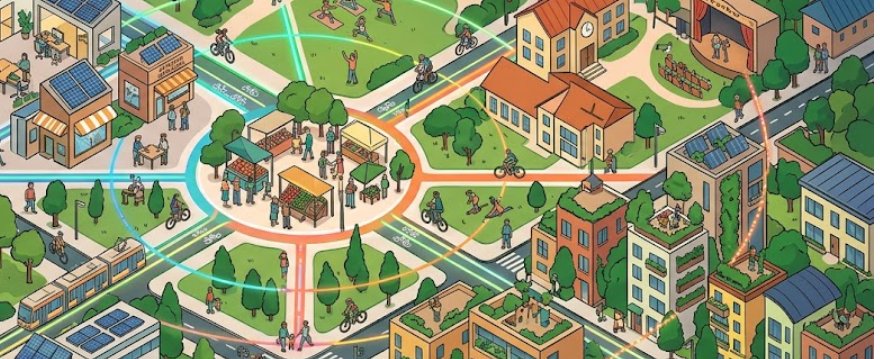
Figure 1: Defining the borders of a "community" (which also define a 15-minute City)4. Improving Food Security and Nutrition
By integrating food sources into the neighborhood fabric, residents can access nutritious options without needing to travel far. This supports not only better individual diets but also community resilience through shorter supply chains and support for local agriculture, especially in times of crisis or disruption.
- Proximity to fresh food markets and urban farms encourages healthier eating.
- Localized food systems reduce reliance on processed or unhealthy foods.
5. Strengthening Social Connections
When people can comfortably walk around their community, incidental interactions and neighborly bonds flourish. Shared parks, plazas, and community centers create informal gathering points that nurture a sense of belonging and collective identity, essential components of a healthy urban environment.
- Walkable neighborhoods foster interactions, reducing loneliness and improving mental health.
- Public spaces enhance community engagement, leading to stronger social support networks.
6. Reducing Stress and Enhancing Well-being
The 15-minute city removes the daily pressure of long travel times, freeing up time and mental energy for family, hobbies, and rest. Access to intellectually and culturally enriching spaces promotes lifelong learning, creativity, and emotional resilience, contributing to overall well-being.
- Shorter commute times lead to better work-life balance and reduced stress.
- Easy access to leisure spaces, libraries, and cultural centers supports relaxation and cognitive health.
7. Supporting Aging in Place
By embedding healthcare, shops, and social venues within walking distance, older adults can maintain autonomy and participate actively in community life. Thoughtful urban design, including ramps, benches, and well-lit paths, ensures that seniors navigate their environment with confidence and safety.
- Elderly residents can remain independent with access to essential services.
- Safe streets and barrier-free infrastructure reduce the risk of falls and injuries.
Annex: Case Studies
Finland:
The North Karelia Project, Finland: Community-Based Prevention
In the early 1970s, Finland's North Karelia region had one of the highest rates of cardiovascular disease in the world. Rather than relying only on hospitals and medical treatment, local authorities launched a community-wide programme that encouraged healthier lifestyles. Schools, workplaces, food retailers, farmers, health centres, and community organizations worked together to reduce smoking, lower salt and saturated fat consumption, and promote physical activity.
Community health promotion and prevention Over the following decades, major declines were recorded in smoking, blood pressure, and cholesterol levels. Coronary heart disease mortality among middle-aged people fell dramatically, making North Karelia one of the world's most cited examples of preventive public health. The project demonstrated that health is not created only in clinics but also in neighbourhoods, schools, shops, and everyday environments. This lesson aligns closely with the 15-Minute Health concept, where healthy living opportunities are integrated into daily life.
Japan:
Okinawa Prefecture: Healthy Ageing Through Local LivingOkinawa is internationally known as one of the world's "Blue Zones," regions where people enjoy exceptionally long and healthy lives. Researchers have linked this longevity to a combination of factors, including a predominantly plant-based diet, regular physical activity, strong social networks, and a sense of purpose known as ikigai. Daily life in many Okinawan communities involves walking, gardening, shopping locally, and frequent interaction with neighbours.
Healthy ageing and local living A key feature of traditional Okinawan settlements is that essential services, food outlets, social gathering places, and recreational spaces are located close to where people live. Residents remain physically active without needing formal exercise programmes. The Okinawan experience suggests that healthy ageing is supported not only by individual choices but also by community design that encourages movement, social connection, and access to healthy food within a short distance from home.
Greece:
Ikaria island: Health Through Social Connection and WalkabilityThe Greek island of Ikaria is another internationally recognized Blue Zone. Residents experience unusually low rates of chronic disease and dementia and enjoy life expectancies significantly above average. Researchers attribute this to a combination of Mediterranean dietary patterns, natural physical activity, strong family relationships, community participation, and low stress lifestyles.
Social connection and active lifestyles Ikaria's mountainous landscape encourages daily walking, while village life fosters frequent social interaction. Markets, cafes, churches, and community spaces function as both social and health-supporting infrastructure. Rather than separating health from daily life, the island's settlements naturally combine movement, social engagement, and access to fresh food. This provides a useful model for 15-Minute Health planning, where the built environment supports well-being without requiring major behavioural changes.
United Nations:
Healthy Cities Movement: Urban Design for Well-BeingThe Healthy Cities movement, initiated by the World Health Organization, promotes the idea that health is shaped by housing, transport, green spaces, public services, and community participation as much as by healthcare. Cities participating in the programme have invested in walkable neighbourhoods, cycling infrastructure, parks, local health services, and community centres to improve quality of life and reduce health inequalities.
Urban design and supportive environments The movement has demonstrated that urban design can directly influence physical activity, mental health, social cohesion, and access to essential services. Recent research also shows that people who live in more walkable neighbourhoods are significantly more likely to achieve recommended levels of physical activity. By ensuring that daily needs can be met within a short walk or bicycle ride, Healthy Cities initiatives provide a strong practical foundation for the 15-Minute Health approach.
The concept of a 15-minute City is explored in detail in GDRC's Urban Governance programme. Have a look!
This work by GDRC is licensed under a Creative Commons Attribution-ShareAlike 4.0 International License. You are free to share and adapt this piece of work for your own purposes, as long as it is appropriately citied. . More info: http://creativecommons.org/licenses/by-sa/4.0/
on




|
Return to Healthy Cities Contact: Hari Srinivas - [email protected] |