
Urban Rewilding
Rewilding and Urban Biodiversity
Hari Srinivas One-Pager Series C-123
Abstract:
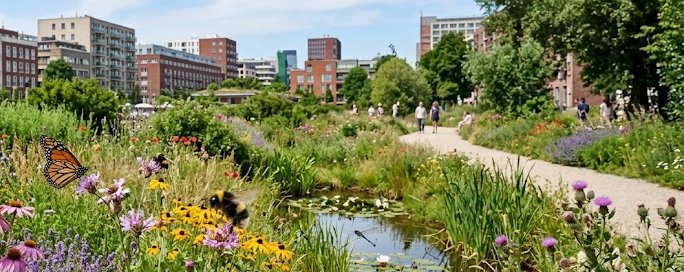
Urban biodiversity is an essential foundation for resilient, healthy, and climate-adaptive cities. This paper explores how urban rewilding can restore ecological functions by reconnecting fragmented habitats, promoting native species, and allowing natural processes to shape urban landscapes. It examines the challenges posed by conventional urban development, including habitat loss, ecological fragmentation, invasive species, and disrupted natural cycles, and highlights practical rewilding strategies such as Miyawaki micro-forests, pollinator corridors, wetland restoration, eco-connective infrastructure, and spontaneous succession zones.The document also discusses biodiversity across multiple scales, from genetic diversity to landscape connectivity, and demonstrates how thriving urban ecosystems contribute to climate regulation, flood mitigation, air quality improvement, natural pest control, and human well-being. Urban rewilding is presented as a scalable pathway for transforming cities into active contributors to ecological resilience and sustainable urban developmen
Keywords:
Urban rewilding, Urban biodiversity, Habitat connectivity, Ecological restoration, Native species, Green infrastructure, Climate resilience, Nature-based solutions
1. Biodiversity Belongs in Cities
Historically, conservation was treated as something that only happens "out there"?in remote national parks, pristine wetlands, or wilderness reserves. However, cities are not ecological voids. Urban areas contain diverse microclimates and habitats that support highly adaptable communities of birds, pollinators, mammals, fungi, and complex soil microbiomes.Integrating robust biodiversity into urban design isn't a cosmetic luxury; it is a foundational pillar of modern climate adaptation and environmental health. When we support urban wildlife, we build more resilient, self-cleaning, and naturally climate-buffered cities.
2. The Urban Biodiversity Challenge
Traditional urban development treats nature as a structured ornament rather than a living system, resulting in severe ecological degradation:
- Habitat Obliteration: Asphalt and concrete seal the ground, wiping out foundational topsoils and native plant communities.
- Severe Fragmentation: Survival becomes difficult when green patches are isolated. Wildlife populations are trapped in localized ecological islands, unable to migrate, forage safely, or find diverse mates.
- Homogenization & Invasives: Highly manicured lawns and non-native ornamental plants offer little nutritional value to local fauna, creating an ideal vacuum for aggressive invasive species to dominate.
- Broken Ecological Loops: Natural cycles of water infiltration, nutrient decomposition, and insect-driven pollination are severed, forcing cities to rely on expensive, artificial engineering fixes.
3. How Rewilding Restores Function
Urban rewilding flips the script on traditional landscaping. Instead of planting generic, high-maintenance lawns, rewilding prioritizes structural complexity, native plant selection, and minimized human interference.
Table 1: Tangible Biodiversity Benefits of Different Ecological Mechanisms
Rewilding Strategy Core Ecological Mechanism Tangible Biodiversity Benefit Miyawaki Micro-Forests Ultra-dense planting of multi-layered, native trees (3-5 saplings per m2). Establishes mature, self-sustaining ecosystems up to 10x faster with 18x higher biodiversity potential than standard tree farms. Pollinator Corridors Strategic networks of native wildflowers and undisturbed roadside verges. Restores critical insect highways, directly supporting declining bee, butterfly, and hoverfly populations. Daylighting & Wetland Recovery Uncovering buried urban streams and building bioretention ponds. Provides immediate breeding grounds for amphibians, macroinvertebrates, and migratory waterfowl. Eco-Connective Infrastructure Designing green roofs, living walls, and vegetated wildlife overpasses. Physically bridges urban fragments, allowing species safe passage through hostile terrain. Spontaneous Succession Zones Designated "no-mow" zones that let local plants reseed naturally. Allows complex, wild food webs and structural shelter to return to the landscape at zero financial cost. Visualize the Impact:
Rewilding SimulatorTo see how balancing the specific interventions illustrated in Table 1 above alters a city's ecological performance, adjust the parameters below in the simulator to calculate estimated biodiversity gains and temperature impacts.
Source: GDRC concept; simulator visualised with AI tools and edited by author
4. Biodiversity at Multiple Scales
Successful rewilding views the city through a wide lens, ensuring resilience across four distinct layers of the ecosystem. LANDSCAPE CONNECTIVITY helps to stitch urban cores back into regional wild networks. This improves HABITAT DIVERSITY, creating a mosaic of wetlands, meadows, and canopies. It also improves SPECIES DIVERSITY which rebuilds rich webs of plants, insects, apex birds, etc. ultimately benefiting GENETIC DIVERSITY allowing gene flow across groups to stop inbreeding loops.
- Species Diversity: Swapping out resource-intensive monoculture lawns for native perennials quickly sparks a bottom-up food web recovery. More specialized insects arrive, followed closely by insectivorous birds, birds of prey, and small mammals.
- Habitat Diversity: By purposefully mixing distinct environments such as dry gravel gardens, damp swales, and dense vertical thickets, we offer specialized niches for thousands of overlooked urban species.
- Genetic Diversity: Isolated habitats inevitably cause genetic bottlenecks. Wildlife corridors give species the freedom to travel, cross-pollinate, and breed widely, ensuring long-term evolutionary survival.
- Landscape Connectivity: Rewilding transforms city parks from isolated "zoos" into vital, stepping-stone habitats that seamlessly connect regional wild lands across entire continents.
5. Tangible Benefits for Human Communities
When we design cities with wildlife in mind, humans harvest the immediate compounding returns of nature's infrastructure:
- Microclimate Cooling: High-density foliage and natural evaporation from soil can drop urban heat island effects by 1.3degC to 2.5degC, drastically reducing heat-related illnesses and summer cooling costs.
- Stormwater Safeguards: Restored urban soils and healthy root networks act like a giant sponge. They absorb torrential rain, recharge aquifers, and shield low-lying neighborhoods from flash floods.
- Air Filtration and Carbon Action: Layered canopies capture harmful fine particulate matter (PM2.5) while packing away atmospheric carbon inside dense wood and undisturbed soils.
- Natural Pest and Disease Buffers: Intact ecosystems invite natural predators like bats, dragonflies, and raptors to comfortably colonize urban zones, managing mosquito, rodent, and pest populations for free.
- Psychological Ecosystem Services: Proximity to genuine wild green spaces is linked to a measurable drop in human cortisol (stress) levels, lower rates of depression, and enhanced cognitive function for citizens.
6. Key Takeaway
Urban biodiversity isn't an ornamental luxury or a collection of isolated aesthetic projects. It is about actively inviting natural, self-sustaining biological systems back into our everyday lives.Urban rewilding offers a clear, highly scalable path to transition our cities from heavy consumers of environmental health into active, living contributors to planetary resilience.

|
|

 |
Return to Urban Rewilding Contact: |