
| |||||||||||||
| |||||||||||||

 "Earth provides enough to satisfy every man's need but not every man's greed."
 onsider the immense pressure put on the environment. Researchers Bill Rees and
Mathis Wackernagel have developed the ecological footprint concept - the area of land
needed to provide the necessary resources and absorb the wastes generated by a
onsider the immense pressure put on the environment. Researchers Bill Rees and
Mathis Wackernagel have developed the ecological footprint concept - the area of land
needed to provide the necessary resources and absorb the wastes generated by a



1. What is an Ecological Footprint?
The ecological footprint measures how much biologically productive land and water area a population requires to produce the resources it consumes and to absorb its waste, using prevailing technology.

2. Global Overview
- Current global footprint: About 1.7 Earths are needed to sustain current consumption patterns.
- Biocapacity: The planet can regenerate roughly 1.0 Earth�fs worth of resources per year.
- Ecological Overshoot Day (2025 est.): Around July 28 - the date when humanity exhausts Earth's annual budget.
3. Country Comparisons
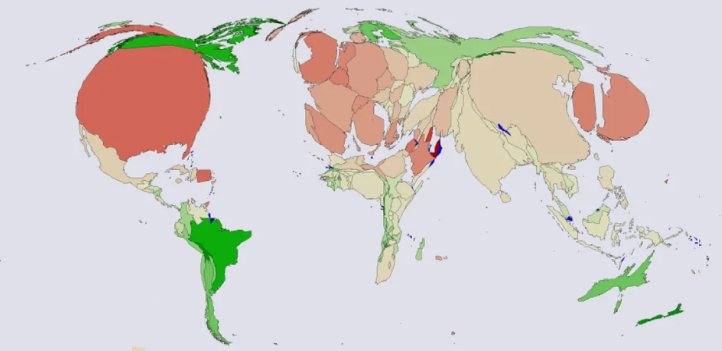
- High footprint countries: United States, Canada, Australia, and Gulf States ? over 7 global hectares (gha) per person.
- Low footprint countries: India, Indonesia, and many African nations - under 2 gha per person.
- Japan: Around 4.6 gha per person (global average: 2.8 gha).
4. Key Components of the Footprint
- Carbon footprint: Over 60% of the total ecological footprint.
- Cropland and grazing land: Major drivers through food production.
- Built-up land: Expanding urbanization and infrastructure.
- Forest products: Wood, paper, and other biomass demands.
5. Trends and Implications
- Global resource use has tripled since 1970.
- Urban lifestyles and consumption patterns are the largest contributors.
- Reducing footprints requires efficiency, circular economy practices, and sustainable diets.
6. Did You Know?
- If everyone lived like the average American, we would need 5 Earths.
- If everyone lived like the average Indian, we would need 0.8 Earths.
- The top 10% of income earners globally account for nearly half of all emissions.
👭More than one million people are added to the world's cities each week, and by the year 2000 over a half of the total world population will be urban.
 The world-average ecological footprint is approximately 2.75 global hectares (gha) per person, while the available biocapacity (supply of nature) is only about 1.63 gha per person (2022 data).
|
jul.24
|
 GDRC calculated the ecological footprint of Tokyo metropolitan area. It turned out to be almost three times the land area of Japan as a whole