The Backbone of Urban Asia:
|
 |
Hari Srinivas |
| Policy Analysis Series E-243 |

|
Abstract: Informal transport forms the true mobility backbone of developing Asia's cities, connecting millions through flexible, affordable, and adaptive paratransit systems such as jeepneys, tuk-tuks, and motorbike taxis. Yet, despite its indispensability, it remains trapped in a policy vacuum, neglected, stigmatized, and poorly integrated into formal transport planning. This paper proposes a comprehensive policy framework for integrating informal transport into the urban mobility ecosystem, anchored on three interlinked pillars: economic and labor formalization, safety and environmental regulation, and digital and physical integration. By transforming informal operators into organized stakeholders, modernizing fleets, and connecting services through digital platforms and spatial planning, policymakers can shift from suppression to strategic inclusion. The outcome is an equitable, sustainable, and resilient mobility system that recognizes informal transport as a vital partner in shaping Asia's urban future. |
|
Keywords: sustainable transportation, climate mitigation, energy efficiency, sustainable tourism, urban planning, accessibility, ecological economics, mobility systems |
I. Introduction: The Urban Mobility Paradox
The streets of Asia's rapidly growing megacities are defined by a vivid mobility paradox. While gleaming metro systems symbolize modernity and progress, the real movement of millions is often powered by the gritty, flexible, and indispensable engine of informal transport (IT). From Manila's jeepneys and Jakarta's ojek (motorbike taxis) to Delhi's auto-rickshaws, these paratransit systems fill the vast, critical gaps left by inadequate formal public networks. They are the lifeline of urban opportunity, ensuring affordable door-to-door connections, generating substantial employment, and thriving where state planning fails to penetrate.Yet, this vital sector operates in a policy vacuum, treated often as an adversary to be regulated out of existence rather than a core asset to be strategically managed. The cost of this neglect is paid in the form of chaotic traffic, soaring emissions, and precarious labor conditions.
This think-piece argues that the policy focus must urgently shift from eradication and neglect to strategic integration and structured formalization. The future of inclusive, sustainable urban mobility in developing Asia hinges not on replacing informal transport, but on creating a comprehensive policy framework that harnesses its strengths while mitigating its weaknesses.
II. The Policy Failure and Dual Challenge
Historically, policymakers have viewed informal transport through a narrow lens of disorder and illegality. Driven by a desire for 'world-class' city aesthetics, municipal efforts have often centered on outright bans, restrictive zoning, or punitive regulations. These policies invariably fail, only pushing operations further underground, fueling corruption, and harming the low-income populations dependent on both the service and the jobs it provides.This failure defines the Policy Dual Challenge: how to preserve the inherent flexibility, adaptability, and affordability of informal transport while simultaneously ensuring safety, environmental sustainability, and integration with the broader urban ecosystem. The systems' very strength, their responsiveness to dynamic local demand, is precisely what complicates centralized regulation. A successful policy approach must therefore be decentralized, partnership-driven, and focused on three interlocking pillars: economic and labor formalization, environmental and safety regulation, and systemic digital and physical integration.
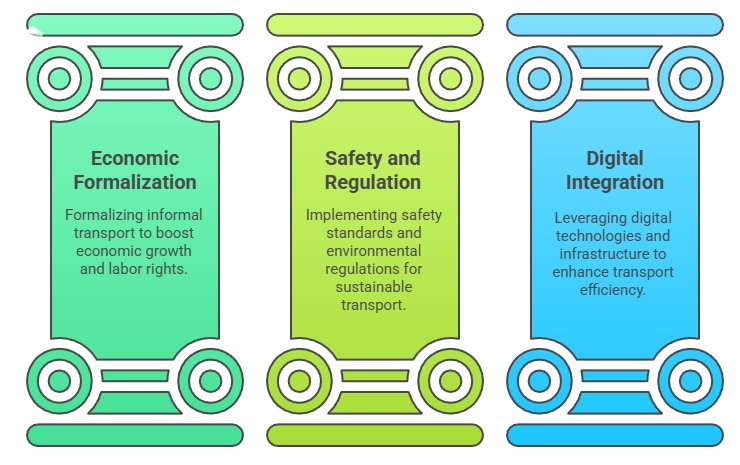
Figure 1: The Three Pillars of Informal Transport Policy
III. Pillar 1: Economic and Labor Formalization
The vast majority of informal transport workers operate without the protections, benefits, or stability afforded to formal sector employees. Policy must aim to transform these precarious jobs into stable, recognized livelihoods, empowering the drivers as key stakeholders in urban mobility.The first step is Operator Licensing and Association. Policy should mandate mandatory registration of operators, tying this formal recognition to access to social security, health insurance, and training programs. Rather than licensing individual vehicles, policy should encourage and support the formation of driver co-operatives and associations. These groups can then be entrusted with self-regulating routes, negotiating service standards, and acting as a collective body for dialogue with the city government. This approach, exemplified in aspects of the jeepney modernization program in Manila, shifts the regulatory burden from the state to self-governing professional bodies.
Furthermore, policy must address Fair Fare Structures. While the current flexibility allows for affordability, it also enables price gouging and unsustainable competition. Policymakers should work with driver associations to implement transparent, distance-based, and digitally trackable pricing models. This protects consumers while ensuring drivers earn a living wage, stabilizing the sector economically.
IV. Pillar 2: Safety and Environmental Regulation
The most severe public critiques of informal transport relate to safety hazards and contribution to air pollution. Addressing these requires targeted interventions focused on the vehicle fleet and driving standards.Policy must prioritize Vehicle Modernization and Scrappage Schemes. Many vehicles, particularly cycle-rickshaws, older tuk-tuks, and vans, are significant sources of noise and particulate matter pollution. Governments, backed by international climate funding, must offer targeted subsidies or low-interest loan schemes to facilitate the transition to low - emission or electric vehicles (e.g., electric three-wheelers). Successful implementation demands a supportive infrastructure policy, including the strategic placement of public charging or battery-swapping stations accessible to IT operators.
Equally critical are Safety and Maintenance Standards. Mandatory, subsidized, and periodic vehicle inspections must be enforced. This should be paired with mandatory driver training programs that are easily accessible and culturally appropriate, focusing on defensive driving, adherence to traffic laws, and customer service. By tying licensing (Pillar 1) to continuous training and vehicle compliance, policymakers can ensure that formalization directly translates into safer, cleaner services for the public.
V. Pillar 3: Digital Integration and Physical Infrastructure
The future of informal transport is one of digital inclusion and physical convergence. Policy is necessary to move these systems from being disconnected services to being a true feeder network for the formal transport spine.Digital Policy Frameworks are key. The rapid success of platforms like Grab and Gojek in Southeast Asia demonstrates the power of technology to formalize transactions, standardize fares, and collect real - time data on supply and demand. Government policy should encourage and perhaps even mandate the use of open data platforms and APIs (Application Programming Interfaces) to integrate IT operations - including route data and occupancy - into a city's central transport management system. This data is essential for rationalizing routes, adjusting schedules, and making informed investment decisions.
Finally, Physical Integration must be mandated in urban planning. Policy should require the creation of dedicated informal transport pick-up and drop-off zones directly adjacent to metro and bus stations, effectively treating them as the 'last-mile' arm of the formal network. Implementing integrated ticketing and streamlined transfer lanes ensures seamless movement across the urban mobility spectrum. An integrated city is one where a passenger can pay for a single journey that starts on a motorbike taxi, transfers to a metro train, and finishes on a songthaew, all under a cohesive fare policy.
VI. The Integrated Path Forward
Informal transport is not an anomaly to be fixed, but a robust manifestation of local entrepreneurial response to an unmet need. It is already the backbone of urban mobility for millions. The necessary policy is not one of eradication, but of strategic investment and sophisticated management.The path forward requires political courage to move beyond aesthetic concerns and embrace a hybrid mobility model. This involves empowering driver associations, incentivizing the transition to green fleets, and leveraging technology to integrate services.
By recognizing and regulating informal transport as a formal, essential component of the urban fabric, policymakers in Asia's developing countries can aim for inclusive, sustainable, and capable transportation system tuned into its urbanization processes. The ultimate goal is not merely a cleaner or safer paratransit system, but a cohesive metropolitan transport ecosystem that serves every citizen, regardless of their location or income.
Annex: Case studies used for policy analysis
|
Cooperative-based Licensing (Philippines)
 Under the Jeepney Modernization Program, operators are encouraged to form driver cooperatives or transport associations to receive collective licenses, access finance, and negotiate routes, shifting from fragmented individual operators to organized, accountable entities.
|
Digital Platform Partnerships (Indonesia)
 In cities such as Jakarta and Surabaya, mobile services such as Gojek and Grab work with local governments to formalize ojek (motorbike taxi) drivers through digital registration, fare standardization, and safety training, linking informal workers to health insurance and accident coverage.
|
Route Rationalization and Mapping (India)
 Cities such as Delhi have conducted digital mapping of informal transport routes (for example, shared autos) to identify overlaps, fill service gaps, and integrate them with formal bus and metro routes.
|
|
Fare Integration Systems (Thailand)
|
Microfinance and Vehicle Upgrade Programs (Bangladesh)
|
Women-focused Safety and Inclusion Programs (India)
|
|
Green Fleet Incentives (Sri Lanka)
|
Paratransit-Metro Feeder Integration (Philippines)
|
Decentralized Regulatory Councils (Pakistan)
|
|
Open Data and Real-time Information Systems (Kenya)
|
Mandatory Driver Training and Certification (Vietnam)
|
Universal Access and Disability-friendly Upgrades (Nepal)
|
 Bangkok has piloted integrated ticketing and fare systems connecting informal modes (songthaews and motorbike taxis) to metro and bus lines, allowing passengers to use a single card or app across services.
 Dhaka's CNG conversion scheme offered low-interest loans for three-wheeler drivers to shift from petrol to cleaner compressed natural gas, reducing emissions while keeping costs affordable for operators.
 Colombo's local government provides tax rebates and scrappage subsidies for operators shifting from diesel tuk-tuks to electric three-wheelers, combining environmental policy with livelihood protection.
 Karachi's informal transport is now overseen by multi-stakeholder transport councils, including driver associations, municipal officers, and commuter representatives-allowing participatory route planning and conflict resolution.
 Projects such as Digital Matatus in Nairobi use open data standards to digitize route, fare, and service information, which can then be integrated into public transport apps and planning systems.
 Hanoi introduced mandatory driver training programs for informal vehicle operators focusing on traffic laws, customer service, and eco-driving, linking certification to license renewal and access to microloans.
 Pilot programs in Kathmandu retrofit selected informal vehicles with low-entry designs and safety modifications for persons with disabilities and the elderly, supported by local NGOs and donor agencies.
|
|

 |
Return to Sustainable Transportation |