Urban Environmental Management
| Sustainable tourism in its purest sense, is an industry which attempts to make a low impact on the environment and local culture, while helping to generate income, employment, and the conservation of local ecosystems. It is responsible tourism that is both ecologically and culturally sensitive. This web theme covers issues related to both sustainable tourism and eco-tourism. |
|
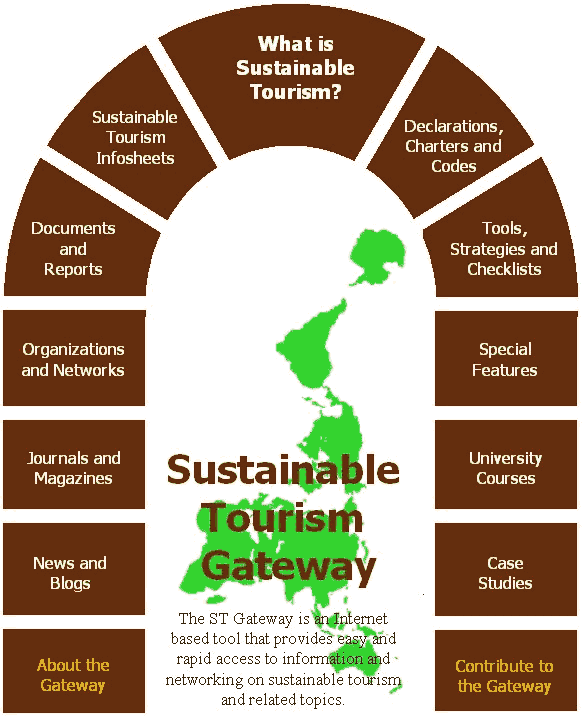
Sustainable
Tourism InfoSheets
 |
|
Declarations, Charters and Codes
- Climate Change and Tourism Responding to Global Challenges, Davos Declaration, October 2007
- Responsible Tourism in Destinations: The Cape Town Declaration, August 2002
- Quéebec Declaration on Ecotourism, May 2002
- The World Ecotourism Summit: Final Report, May 2002
- Archive: International Year of Ecotourism -2002
- WSSD - Johannesburg Plan of Implementation: Sustainable Tourism
- Global Codes of Ethics for Tourism, 1999
- Commission on Sustainable Development Seventh Session (April 1999)
- - The Global Importance of Tourism
- - Workers and Trade Unions in the Web of Tourism
- - Sustainable Tourism: A Local Authority Perspective
- - Sustainable Tourism: An NGO Perspective
- Sustainable Tourism: The Berlin Declaration, March 1997
- Charter for Sustainable Tourism, April 1995
Tools, Strategies and Checklists
- CBD: Guidelines on Biodiversity and Tourism development
- Q&A on Eco-Tourism
- Australia: Design Guide for Eco-Tourism
- Eco-tours: Tread Carefully
- Ten Commandments on Eco-Tourism
- TIMEOUT: Retracing your Travel Fingerprints
- Travel Industry Dictionary
- Tourism Dictionary Online
Documents and Reports
- Tourism and Agenda 21 - Online UNEP Report
- Industry as a partner for sustainable development: WSSD Report on the Tourism Sector
- Environmental Impacts of Tourism
- Eco-Tourism Or Eco-Terrorism?
- From Rio to Johannesburg: New Paths for International Tourism
- Eco-tourism in Albania
- Ecotourism in Costa Rica
- Ecotourism: Threat or opportunity?
- Effects of Climate Change on Recreation and Tourism on the Prairies: A Status Report (PDF Format)
- Hotel managers realize green is not just the color of money
- The Global Importance of Tourism
Organizations, Networks and Initiatives
- ATHE: Association for Tourism in Higher Education
- CHRIE: Council on Hotel, Restaurant and Institutional Education
- Commonwealth Tourism Centre
- Eco Club: The International Ecotourism Club
- Ecotourism Resource Center
- Ecotourism Society
- The Green Globe
- ICER: The International Centre for Ecotourism Research
- International Center for Research and Study on Tourism
- ICRT: International Centre for Responsible Tourism
- IIPT: International Institute for Peace through Tourism
- ISTTE: International Society of Travel and Tourism Educators
- PRIT: Pacific Rim Institute of Tourism
- Pro-Poor Tourism Initiative
- RTP: Responsible Tourism Partnership
- STI: Sustainable Travel International
- TIES: The International EcoTourism Society
- Tourism Concern
- TBR: Travel Business Roundtable
- TIA: Travel Industry Association of America
- TRRA: Travel and Tourism Research Association
- UNEP-DTIE: Sustainable Tourism
- UNEP-DTIE: The Tour Operators Initiative
- WLO: World Leisure Organization
- WTF: World Tourism Forum
- WTO: World Tourism Organization
- WTTC: World Travel and Tourism Council
Internet Resources on Eco-Tourism
- The Ecotravel Center
- The Eco-source - source for ecotourism information and sites
- The Tourism Futures
Journals and Magazines
- List of Tourism-related Journals
- Magazine: Our Environment
- Newsletter: Sustainable Travel Report
Travel/Tourism news and email lists
|
The theme for 2008 is "Responding to the Challenge of Climate Change"
Internationally, tourism is the largest economic sector in terms of earnings, and in terms of number of people employed
International Ecotourism Standard
The International Ecotourism Standard has been developed by Ecotourism Australia in conjunction with the Cooperative Research Centre (CRC) for Sustainable Tourism of Australia. The Standard is available online
Cities to absorb growth in world tourism:
International tourist arrivals in
1995 were 563 million and are expected to reach 1.6 billion by the year
2020. These forecasts use a conservative growth rate of 4.3% and 6.7%
respectively; less than the current growth rate. They do not include any
domestic tourism which can readily be anticipated to equal the
international. It is obvious that most of this increase will have to be
absorbed by cities.
- World Tourism Organization
Sound Ecotourism involves travel to natural destinations, minimizes impact, builds environmental awareness, provides direct financial benefits for conservation, provides financial benefits and empowerment for local people, respects local culture, and supports human rights and democratic movements
- Ecotourism and Sustainable Development: Who Owns Paradise?'(1999)
Changing Travellers.
Nine out of ten respondents to a recent survey are keen to opt for an environmentally and culturally sensitive travel. Or choose tourism products that show concern about tourism's impact on local culture, while protecting the natural environment. - Visa International Asia Travel Intentions Survey 2007.
|
Do you have any suggestions or additions to make on the above information? Please send an email to Hari Srinivas at hsrinivas@gdrc.org
| |
|